

 The Intellectual and Spiritual Legacy of Imam Abu Hamid Al-Ghazali: A Comprehensive Analysis of His Life, Works, and Enduring Influence
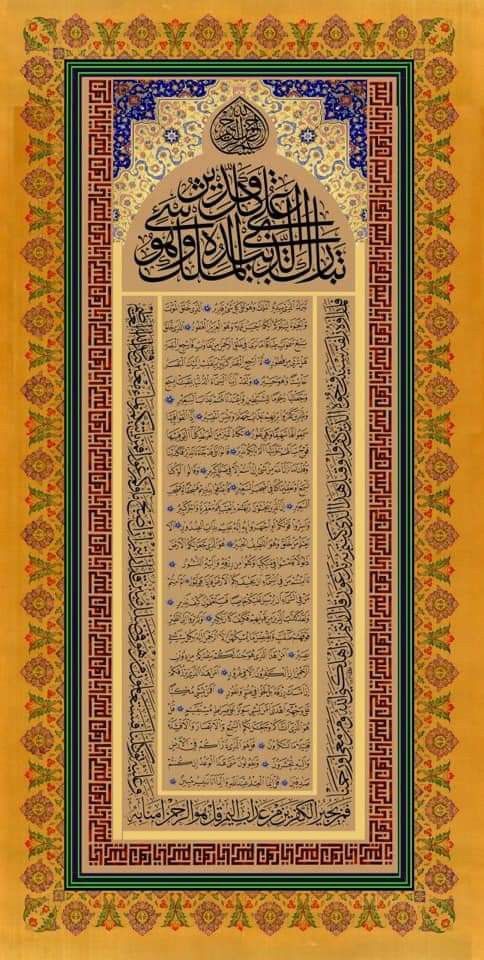
[The following answer was written and compiled using AI tools to very high Phd Thesis standards, any political views within are not my own].
Imam Abu Hamid Al-Ghazali (1058-1111 CE) stands as one of the most towering intellectual figures in Islamic history, earning the honorific title “Proof of Islam” (Hujjat al-Islam) from his contemporaries. His profound contributions spanned theology, philosophy, jurisprudence, mysticism, and education, fundamentally reshaping Islamic thought in ways that continue to reverberate today. This thesis explores Al-Ghazali’s remarkable intellectual journey from celebrated academic to spiritual seeker, analyzes his major works and contributions across diverse fields, and examines his enduring legacy in both the Islamic world and beyond. Through a comprehensive examination of primary sources and contemporary scholarship, this research demonstrates how Al-Ghazali’s unique synthesis of rational inquiry and spiritual experience transformed Islamic intellectual traditions and established paradigms that would influence generations of scholars across cultural boundaries. In a time of intellectual fragmentation and competing religious interpretations, Al-Ghazali developed an integrated approach that reconciled seemingly contradictory elements within Islamic thought, offering a model of engagement that remains instructive for addressing contemporary intellectual and spiritual challenges.
Historical Context and Early Life
Political and Intellectual Landscape of the 11th Century
The 11th century Islamic world witnessed complex political fragmentation and intellectual ferment. Al-Ghazali’s lifetime coincided with the height of Seljuk Turkish power, which had displaced Shi’ite Buyid rule and reinforced Sunni orthodoxy under nominal Abbasid authority. This political reconfiguration created new opportunities for Sunni scholars while intensifying sectarian tensions. Intellectually, the period was characterized by vibrant debates between rationalist philosophers influenced by Greek thought, traditional theologians concerned with preserving orthodox doctrine, jurists focused on practical religious law, and mystics seeking direct spiritual experience15.
The translation movement that had brought Greek philosophical works into Arabic was bearing fruit in the sophisticated philosophical systems of figures like Al-Farabi and Ibn Sina (Avicenna), whose Neoplatonic and Aristotelian approaches to metaphysics sometimes challenged traditional theological positions. Meanwhile, theological schools like the Ash’arites and Mu’tazilites offered competing rationalist frameworks for understanding Islamic doctrine, while Sufi orders developed spiritual practices that sometimes existed in tension with exoteric religious authorities4.
This intellectual landscape presented both opportunities and challenges for religious scholars. The diversity of approaches enriched Islamic intellectual life but also raised questions about how to integrate or adjudicate between competing claims to religious truth. It was in this context of intellectual diversity and sometimes tension that Al-Ghazali emerged as a figure capable of engaging deeply with multiple traditions while ultimately offering a synthesis that would profoundly influence subsequent Islamic thought3.
Birth and Early Education
Abu Hamid Muhammad ibn Muhammad al-Tusi al-Ghazali was born in approximately 1058 CE (450 AH) in Tus, a city in the Khorasan province of what is now Iran15. His birth occurred during a significant political transition, as the Seljuks had recently entered Baghdad, ending Shi’ite Buyid influence over the Abbasid Caliphate and ushering in a new era of Sunni political ascendancy15.
Details about Al-Ghazali’s early family life remain somewhat limited. There is a tradition, though questioned by some modern scholars, that his father died in poverty, leaving Al-Ghazali and his brother Ahmad in the care of a Sufi guardian15. What seems more reliably established is that he began his education in his hometown of Tus, where he received preliminary instruction in Islamic jurisprudence (fiqh) from Ahmad al-Radhakani and studied under the Sufi master Abu Ali Farmadi15.
Al-Ghazali demonstrated exceptional intellectual aptitude from an early age. As one biographer notes, “He quickly surpassed all his teachers” and consequently sought more advanced education by traveling to larger centers of learning19. As a teenager, he journeyed to Nishapur to study at a more prestigious madrasa (Islamic educational institution)19.
Advanced Studies and Intellectual Formation
In Nishapur, Al-Ghazali became a student of Imam Al-Juwayni, regarded as “the most outstanding Muslim scholar of his time”15. Al-Juwayni, known by the honorific title “Imam al-Haramayn” (the imam of the two sacred cities of Mecca and Medina), was a distinguished jurist and theologian who provided Al-Ghazali with comprehensive training in Islamic jurisprudence, theology, logic, and dialectics16.
Under Al-Juwayni’s tutelage, Al-Ghazali mastered the Shafi’i school of Islamic jurisprudence and became well-versed in Ash’arite theology, which represented the dominant orthodox theological position of his time. He also gained exposure to various intellectual currents, including Greek philosophy, which had been translated and assimilated into Islamic intellectual discourse by scholars such as Al-Farabi and Ibn Sina16.
Al-Juwayni recognized his student’s exceptional abilities and reportedly referred to Al-Ghazali as “an ocean to drown in,” indicating his intellectual depth and potential. During this formative period, Al-Ghazali developed the analytical skills and comprehensive knowledge of Islamic sciences that would serve as the foundation for his later contributions. His education under Al-Juwayni instilled both scholarly rigor and an appreciation for the integration of different branches of knowledge, attributes that would characterize his mature intellectual approach17.
Rise to Academic Prominence
Appointment to the Nizamiyya
Following the death of Al-Juwayni in 1085 CE, Al-Ghazali departed from Nishapur and entered the court of Nizam al-Mulk, the powerful vizier of the Seljuk empire15. Nizam al-Mulk had established a network of prestigious educational institutions (Nizamiyyas) throughout the Seljuk domains to promote Sunni orthodoxy and train qualified administrators and religious scholars. These institutions represented the highest echelon of formal education in the medieval Islamic world15.
The vizier quickly recognized Al-Ghazali’s exceptional intellectual gifts and rising reputation. After observing his scholarly capabilities, Nizam al-Mulk bestowed upon Al-Ghazali the prestigious titles of “Brilliance of the Religion” and “Eminence among the Religious Leaders,” marking him for advancement within the elite scholarly establishment15.
This patronage culminated in July 1091, when Al-Ghazali, at approximately 33 years of age, received appointment to “the most prestigious and most challenging” academic position of the time: chief professor at the Nizamiyya madrasa in Baghdad15. This appointment represented extraordinary recognition for the young scholar and placed him at the intellectual center of the Islamic world. Baghdad, though no longer the political capital of a unified Islamic empire, remained a preeminent center of learning and culture where diverse intellectual traditions converged16.
Academic Achievements and Recognition
Al-Ghazali’s tenure at the Nizamiyya was characterized by remarkable scholarly productivity and growing fame. As the chief professor, he lectured to more than 300 students on Islamic jurisprudence, theology, and related disciplines16. His teaching was reportedly met with universal acclaim, and his intellectual reputation spread rapidly throughout the Islamic world. Contemporary sources note that “His teaching and debating received unanimous approval whereupon he became the Imam of Iraq after having attained the status of Imam of Khorasan”17.
During this period, Al-Ghazali’s status rose dramatically within both academic and social hierarchies. As one biographer observed, “His rank in Baghdad rose above that of princes, viziers, men of reverence, and the household of the Caliphate”17. This statement reflects not only Al-Ghazali’s scholarly prestige but also the elevated social position that leading religious scholars could attain in medieval Islamic society, where intellectual and religious authority often translated into significant social standing and influence.
Beyond his teaching duties, Al-Ghazali engaged in refuting what he considered heretical ideologies and responding to questions from across the Muslim community20. These activities positioned him as a defender of orthodox Sunni Islam against various intellectual challenges, including certain philosophical positions that he viewed as incompatible with Islamic doctrine. His reputation for brilliance in debate and clarity in exposition contributed to his growing stature as a leading intellectual authority.
Intellectual Engagements and Early Works
While in Baghdad, Al-Ghazali undertook an intensive study of Greek-influenced philosophy, particularly the works of Al-Farabi and Ibn Sina (Avicenna)16. This engagement was not merely academic but was motivated by his concern about the influence of Greek metaphysical concepts on Islamic theology. He sought to understand philosophical arguments thoroughly so that he could effectively evaluate their consistency with Islamic doctrines.
This period of intensive philosophical study culminated in the writing of “Tahafut al-Falasifa” (The Incoherence of the Philosophers), completed around 1095 CE. This work represented “a major turn in Islamic epistemology” and “a turning point in Islamic philosophy in its vehement rejections of Aristotle and Plato”2. In it, Al-Ghazali systematically examined and critiqued twenty philosophical positions that he considered problematic from an Islamic theological perspective7.
Importantly, Al-Ghazali did not reject philosophy or logical methods wholesale but rather focused his criticism on specific metaphysical conclusions that he believed contradicted Islamic doctrine. His primary objections centered on three philosophical positions that he considered heretical: the assertion of the world’s eternity, the denial of God’s knowledge of particulars, and the denial of bodily resurrection. On other points, he considered the philosophers’ errors less severe7.
This nuanced engagement with philosophy demonstrated Al-Ghazali’s sophisticated understanding of philosophical arguments and his ability to engage with them on their own terms while defending orthodox Islamic theology. The work established him not just as a traditional religious scholar but as an intellectual capable of critically engaging with the most sophisticated philosophical systems of his time.
Spiritual Crisis and Transformation
The Nature of Al-Ghazali’s Crisis
In 1095 CE, approximately four years after his appointment to the Nizamiyya, Al-Ghazali experienced a profound personal crisis that would fundamentally transform his intellectual orientation and life course16. This crisis was multifaceted, involving epistemological doubts, spiritual questioning, and physical manifestations of psychological distress. It was so severe that it reportedly rendered him physically incapable of lecturing for a period16.
Al-Ghazali provided a detailed account of this experience in his autobiographical work “Deliverance from Error” (Al-Munqidh min al-Dalal). He described how he began to question the foundations of knowledge itself, seeking certainty that went beyond traditional authority or rational demonstration. He was searching for knowledge “in which the thing known is made so manifest that no doubt clings to it, nor is it accompanied by the possibility of error and deception”8.
This epistemological crisis was intertwined with existential questions about the purpose of his scholarly pursuits and the state of his spiritual life. Despite his academic success and prestigious position, Al-Ghazali came to recognize what he described as the “knowing pain in the soul” resulting from disconnection from Ultimate Reality5. He realized that his pursuit of knowledge and status had been motivated largely by worldly ambition rather than sincere religious commitment.
As he later wrote in “The Alchemy of Happiness,” people are unhappy because “they are trying to relieve this pain in the soul by recourse to physical pleasure. But physical pleasure cannot relieve a pain that is essentially spiritual”5. This insight applied to his own condition, as he recognized that his academic accomplishments and social status had not provided the spiritual fulfillment he now sought.
Departure from Baghdad and Spiritual Journey
In November 1095, Al-Ghazali made the dramatic decision to abandon his prestigious position in Baghdad16. He announced his intention to perform the pilgrimage to Mecca, a socially acceptable reason for temporary absence. However, his actual plans involved a more comprehensive withdrawal from public life. Before departing, he arranged for the care of his family and distributed his wealth, adopting the simple lifestyle of a Sufi ascetic16.
Rather than proceeding directly to Mecca, Al-Ghazali first traveled to Damascus, where he spent time in seclusion and spiritual practice. He then journeyed to Jerusalem before eventually performing the pilgrimage to Mecca in November 109616. Following these travels, he continued his spiritual journey, moving from place to place and engaging in contemplation, mystical practices, and writing.
This period of Al-Ghazali’s life represented a radical break from his former career path and social position. As described by one biographer, “For ten long years, he remained on his journey of self-discovery and the search for the truth. Wondering through deserts, jungles, cities and mountains, often staying near the tombs of the saints”18. During this time of outward wandering and inner transformation, Al-Ghazali continued to write and occasionally teach, though no longer within the formal institutional framework that had previously defined his career.
Intellectual and Spiritual Reorientation
The decade of spiritual wandering and seclusion profoundly transformed Al-Ghazali’s understanding of knowledge, religion, and human fulfillment. Having previously focused predominantly on external religious sciences such as jurisprudence and theology, he now turned his attention to the inner dimensions of religious experience. Through Sufi spiritual practices and contemplation, he claimed to have attained a form of direct knowledge that resolved his earlier epistemological doubts.
In “Deliverance from Error,” Al-Ghazali recounted how his spiritual crisis was resolved by “a light which God Most High cast into my breast… the key to most knowledge”2. This mystical illumination provided the certainty he had sought, convincing him that direct spiritual experience offered a form of knowledge superior to both theoretical theology and philosophical reasoning.
This transformation did not lead Al-Ghazali to reject his earlier intellectual training but rather to recontextualize it within a more comprehensive understanding of religious knowledge and practice. He came to see the external religious sciences as necessary but insufficient, requiring complementary insight into their inner spiritual dimensions. This perspective would inform his subsequent writings, particularly his magnum opus, “Ihya’ Ulum al-Din” (The Revival of Religious Sciences), which systematically integrated legal, theological, and mystical dimensions of Islam.
Major Works and Contributions
Tahafut al-Falasifa (The Incoherence of the Philosophers)
Written during Al-Ghazali’s time in Baghdad before his spiritual crisis, “The Incoherence of the Philosophers” represents his critical engagement with Greek philosophical thought as transmitted and developed by Muslim philosophers such as Al-Farabi and Ibn Sina (Avicenna). This work marked “a major turn in Islamic epistemology” and “a turning point in Islamic philosophy in its vehement rejections of Aristotle and Plato”2.
In this text, Al-Ghazali systematically examines twenty philosophical positions that he considered problematic from an Islamic theological perspective. The work is organized into twenty chapters, each addressing a specific philosophical position attributed primarily to Ibn Sina7. Al-Ghazali’s primary objections focused on three philosophical positions that he considered heretical: the assertion of the world’s eternity, the denial of God’s knowledge of particulars, and the denial of bodily resurrection7.
Importantly, Al-Ghazali did not reject philosophy or logical methods as a whole but rather critiqued specific metaphysical conclusions that he believed contradicted Islamic doctrine. He focused his criticism specifically on metaphysics while “leaving unchallenged the pure sciences of physics, logic, astronomy, and mathematics”7. This selective engagement with philosophy demonstrated his nuanced approach to non-Islamic intellectual traditions, distinguishing between methodologies that could be useful for defending religious truth and conclusions that he viewed as incompatible with revelation.
“The Incoherence of the Philosophers” had a profound impact on subsequent Islamic intellectual history, prompting responses such as Ibn Rushd’s (Averroes’) “The Incoherence of the Incoherence,” which defended philosophical positions against Al-Ghazali’s critiques14. The work established a framework for critical engagement with philosophy that shaped later Islamic intellectual traditions and continues to influence discussions about the relationship between reason and revelation in Islamic thought.
Ihya’ Ulum al-Din (The Revival of Religious Sciences)
“The Revival of Religious Sciences” is universally recognized as Al-Ghazali’s magnum opus and his most comprehensive and influential work. Composed after his spiritual transformation, this massive work originally spanned 40 volumes and “dealt with Islamic concepts and practices, demonstrating how these might form the foundation of reflective religious life, thereby attaining the higher stages of Sufism”6.
The Ihya is structured into four major sections, each containing ten books:
-
Acts of Worship (Rub’ al-‘ibadat) – covering ritual practices such as prayer, alms, fasting, and pilgrimage
-
Norms of Daily Life (Rub’ al-‘adatat) – addressing social ethics and personal conduct
-
The Ways to Perdition (Rub’ al-muhlikat) – examining spiritual vices and moral failings
-
The Ways to Salvation (Rub’ al-munjiyat) – discussing spiritual virtues and the path to salvation2
What distinguishes the Ihya is its comprehensive integration of external religious observances with their inner spiritual dimensions. For each religious practice, Al-Ghazali discusses not only its formal legal requirements but also its spiritual significance and its role in purifying the heart and drawing closer to God. This approach reflected Al-Ghazali’s post-transformation synthesis of jurisprudence, theology, and mysticism.
The Ihya became “the most frequently recited Islamic text after the Qur’an and the hadith,” and its “great achievement was to bring orthodox Sunni theology and Sufi mysticism together in a useful, comprehensive guide to every aspect of Muslim life and death”2. Islamic scholars like Imam al-Nawawi praised it highly, stating: “Were the books of Islam all to be lost, excepting only the Ihya’, it would suffice to replace them all”6. Other scholars echoed this assessment, with Ibn al-Subki noting that it “ranks among the books which Muslims look after (preserve) and spread far and wide so that many people may be guided reading it”6.
Through the Ihya, Al-Ghazali addressed what he perceived as a spiritual crisis in the Muslim community of his time. He believed that “the Islamic spiritual tradition had become moribund and that the spiritual sciences taught by the first generation of Muslims had been forgotten”15. The work represented his effort to revive these spiritual dimensions without compromising orthodox doctrines or legal requirements, offering a balanced approach that could satisfy both intellectual and spiritual needs.
Al-Munqidh min al-Dalal (Deliverance from Error)
Written toward the end of his life, “Deliverance from Error” is Al-Ghazali’s spiritual autobiography and “is considered a work of major importance”2. In this deeply personal account, Al-Ghazali recounts his intellectual journey through various branches of knowledge, his spiritual crisis, and his eventual finding of certainty through mystical experience.
The work begins with Al-Ghazali’s observation that people often inherit their beliefs uncritically from their parents and environment. He notes that “Every infant is born endowed with the fitra: then his parents make him a jew or christian or magian,” implying that children inherit their parents’ religion through upbringing rather than independent investigation8. This recognition motivated his own quest to distinguish between uncritical acceptance and genuine knowledge.
Al-Ghazali then describes his examination of four major approaches to truth: theology (kalam), philosophy (falsafa), Ismailism (ta’limiyya), and Sufism (tasawwuf). He analyzes the strengths and limitations of each approach, explaining why the first three failed to provide the certainty he sought. He found theology too defensive and concerned with preserving established doctrines, philosophy overreaching in its metaphysical claims, and Ismailism ultimately circular in its appeal to infallible authority.
It was in Sufism that Al-Ghazali discovered what he considered the path to certain knowledge—not through theoretical learning but through direct experience and moral transformation. He recounts how his spiritual crisis was resolved through mystical illumination, which provided a form of knowledge beyond rational demonstration or sensory perception.
“Deliverance from Error” provides invaluable insights into Al-Ghazali’s intellectual and spiritual development and offers a framework for understanding the evolution of his thought across his various writings. It also represents an early example of autobiographical writing in Islamic literature, notable for its psychological depth and intellectual honesty.
Kimiya-yi Sa’adat (The Alchemy of Happiness)
Written in Persian rather than Arabic, “The Alchemy of Happiness” was composed toward the end of Al-Ghazali’s life, around 1105 CE (499 AH)9. While sometimes mistakenly considered merely a summary of the Ihya, Al-Ghazali described it as reflecting “the nature of the latter and a few of his other theological writings”6. Writing in Persian rather than the scholarly Arabic made these teachings more accessible to ordinary people, reflecting Al-Ghazali’s concern with reaching a broader audience beyond the scholarly elite.
The work is structured into four principal parts: religious duties, salvation, human relations, and damnation9. It begins with the foundational statement that “He who knows himself is truly happy,” establishing self-knowledge as the basis for spiritual development5. For Al-Ghazali, this self-knowledge involves recognizing that humans have a “knowing pain in the soul” resulting from disconnection from Ultimate Reality, which cannot be relieved through physical pleasures but only through spiritual realization5.
Al-Ghazali’s analysis of happiness in this work is particularly insightful. He observes that different faculties within the soul correspond to different forms of happiness, with each part of the soul “delighting in that for which it has been created”5. However, he argues that the highest function of the soul is the perception of truth, particularly divine truth, which provides the greatest happiness. He uses an analogy to illustrate this hierarchy: “One would be much happier to meet the King of a country than its Prime Minister. Similarly, one should be much happier to discover the Ultimate Reality than some conditional lesser truth”5.
What distinguished the Alchemy from other theological works of its time was “its mystical emphasis on self-discipline and asceticism”9. The work emphasized “the importance of observing the ritual requirements of Islam, the actions that would lead to salvation, and avoidance of sin”9, while placing these practices within a broader framework of spiritual development and self-transformation.
Other Significant Works
Beyond these major texts, Al-Ghazali produced numerous other works addressing specific aspects of Islamic thought and practice. His corpus spans approximately 70 works, though not all have survived to the present day2.
“Al-Iqtisad fi al-I’tiqad” (The Middle Path in Theology) presents his constructive theological position after his critique of philosophy. In this work, he defends Ash’arite theological doctrines while seeking a balanced approach that avoids both excessive rationalism and blind literalism. “Al-Mustasfa min ‘Ilm al-Usul” (The Essentials of Islamic Legal Theory) represents his mature contribution to usul al-fiqh (principles of Islamic jurisprudence), integrating his broader intellectual synthesis into the framework of legal methodology.
In the educational realm, “Ayyuha al-Walad” (O Youth) presents his advice to students in the form of a letter, distilling his educational philosophy and spiritual counsel. “Mizan al-‘Amal” (The Criterion of Action) explores the relationship between knowledge and action, arguing that true knowledge should manifest in righteous conduct and examining various virtues and vices.
These and other works collectively demonstrate the breadth of Al-Ghazali’s intellectual concerns and his ability to address different audiences with varying levels of sophistication. Whether writing for scholarly specialists or ordinary believers, he consistently sought to integrate intellectual understanding with spiritual insight and practical guidance.
Key Philosophical and Theological Contributions
Critique of Philosophy and Defense of Islamic Theology
Al-Ghazali’s engagement with philosophy, particularly in “The Incoherence of the Philosophers,” represents one of his most significant and widely discussed intellectual contributions. His approach was characterized by sophisticated understanding of philosophical arguments combined with firm commitment to Islamic theological principles. Rather than rejecting philosophy wholesale, Al-Ghazali distinguished between philosophical methods, which he often adopted, and specific philosophical conclusions that he considered incompatible with revealed truth7.
In “The Incoherence,” Al-Ghazali identified twenty philosophical positions worthy of critique, focusing particularly on three that he deemed heretical: the eternity of the world, God’s knowledge of universals but not particulars, and the denial of bodily resurrection7. His objections to these positions were based primarily on their contradiction of revealed truth rather than their logical inconsistency, though he also sought to demonstrate internal contradictions within philosophical arguments.
Al-Ghazali’s critique employed philosophical methods against philosophers themselves, demonstrating his mastery of logical argumentation. He argued that philosophers had not established their metaphysical claims with the certainty they professed, pointing out contradictions and unwarranted assumptions in their reasoning. This sophisticated engagement challenged philosophers to more rigorously examine their own premises and conclusions.
In the theological realm, Al-Ghazali “conclusively refuted Mu’tazilite arguments using Ash’arite views” and “strengthened Sunni Islam by systematically debating tenets of Shi’a Islam, with the infallibility of their Imams being the most significant of his refutations”3. His theological writings defended Ash’arite positions on divine attributes, human freedom, and other contested issues while often providing more nuanced formulations than earlier theologians.
Al-Ghazali’s approach to causality was particularly influential. Against philosophical necessitarianism, he argued that apparent causal connections between events do not represent necessary relationships but rather God’s habitual action. While critics have sometimes interpreted this as a denial of natural causality altogether, Al-Ghazali’s position might better be understood as distinguishing between observable correlations and the metaphysical account of causation, with God as the ultimate cause of all events.
Integration of Sufism with Orthodox Islam
Perhaps Al-Ghazali’s most enduring contribution was his integration of Sufi mysticism with orthodox Sunni theology and jurisprudence. Before Al-Ghazali, there was often tension between Sufi practitioners and scholars of exoteric religious sciences, with each group sometimes viewing the other with suspicion. Through his own spiritual journey and subsequent writings, particularly the Ihya, Al-Ghazali demonstrated that Sufism, properly understood, represented the inner dimension of Islamic practice rather than a deviation from it4.
Al-Ghazali’s approach to Sufism emphasized maintaining compliance with Sharia (Islamic law) while pursuing the higher spiritual states sought by mystics. He criticized two extremes: legalists who focused exclusively on external conformity without inner spiritual development, and antinomian mystics who claimed that their spiritual state exempted them from religious obligations. For Al-Ghazali, true spiritual advancement deepened rather than diminished one’s commitment to religious observances.
In the Ihya, Al-Ghazali systematically showed how each ritual obligation contained both an external form and an inner reality. Prayer, for instance, involved specific physical movements and recitations, but these were meant to facilitate an inner state of presence with God. By elucidating the spiritual dimensions of religious practices, Al-Ghazali made mysticism accessible and relevant to ordinary believers while ensuring it remained grounded in orthodox doctrine.
This integration had profound implications for subsequent Islamic thought. As one source notes: “His great achievement was to bring orthodox Sunni theology and Sufi mysticism together in a useful, comprehensive guide to every aspect of Muslim life and death”2. After Al-Ghazali, Sufism gained greater acceptance within mainstream Islamic scholarship, and the idea that Islam encompassed both zahir (outward) and batin (inward) dimensions became widely accepted4.
Theory of Knowledge and Epistemology
Al-Ghazali’s spiritual crisis led him to develop a sophisticated epistemology that distinguished between different types of knowledge and their relative certainty. His quest for knowledge “in which the thing known is made so manifest that no doubt clings to it, nor is it accompanied by the possibility of error and deception”8 led him to critically examine various sources of knowledge and their limitations.
In “Deliverance from Error,” Al-Ghazali recounts how he first doubted sense perception, noting that even the seemingly most reliable sensory knowledge could be mistaken, as when the eye perceives a shadow as stationary when it is actually moving slowly. He then considered whether certain knowledge might be found in rational first principles, but questioned whether these too might be subject to doubt, as in dreams one accepts logical impossibilities as true8.
After examining various sources of knowledge—sense perception, rational first principles, authoritative teaching, and mystical illumination—Al-Ghazali concluded that absolute certainty came only through direct mystical experience (dhawq, literally “tasting”). However, he did not reject other forms of knowledge but rather situated them within a hierarchical epistemological framework. Logical demonstration, sense perception, and textual authority all had valid but limited domains of application.
This epistemological framework allowed Al-Ghazali to appreciate the contributions of various intellectual traditions while recognizing their limitations. It also established mystical knowledge as a legitimate form of knowing within Islamic thought—not opposed to rational knowledge but transcending and completing it. As one source notes, Al-Ghazali “introduced a profound concept of spirituality without neglecting religious obligations”4, integrating intellectual understanding with spiritual insight.
Concept of Happiness and Human Nature
Al-Ghazali developed a profound understanding of human psychology and the nature of happiness that integrated philosophical insights with religious teachings. In “The Alchemy of Happiness,” he begins with the premise that “He who knows himself is truly happy”5, establishing self-knowledge as the foundation for genuine happiness.
For Al-Ghazali, humans are born with “a knowing pain in the soul” resulting from disconnection from Ultimate Reality5. This existential condition cannot be resolved through physical pleasures or worldly achievements, which many people mistakenly pursue. As he observes, people are unhappy because “they are trying to relieve this pain in the soul by recourse to physical pleasure. But physical pleasure cannot relieve a pain that is essentially spiritual”5.
Al-Ghazali analyzed the human soul (nafs) as having different faculties, each with its appropriate function and corresponding happiness. The highest function of the soul is the perception of truth, particularly divine truth, which provides the greatest happiness5. He used an analogy to illustrate this hierarchy: “One would be much happier to meet the King of a country than its Prime Minister. Similarly, one should be much happier to discover the Ultimate Reality than some conditional lesser truth”5.
This understanding of happiness had profound implications for Al-Ghazali’s ethics and spirituality. Since true happiness comes through knowledge of and proximity to God, the path to happiness lies in purifying the heart from worldly attachments and cultivating the virtues that facilitate divine knowledge. This perspective integrated philosophical analyses of human psychology with religious teachings about spiritual fulfillment, offering a comprehensive account of human nature and its ultimate purpose.
Educational Philosophy
Al-Ghazali made significant contributions to educational theory and practice, drawing on both his experience as a teacher and his integrated understanding of intellectual and spiritual development. His educational philosophy emphasized that knowledge should lead to both intellectual understanding and spiritual transformation, addressing the whole person rather than merely transmitting information.
In his educational writings, Al-Ghazali distinguished between knowledge that benefited one in the afterlife and purely worldly sciences, while acknowledging the legitimate role of both. He stressed that learning should lead to action, criticizing scholars who accumulated knowledge without allowing it to transform their character or conduct. “Al-Ghazali believed that good education should encompass the development of the intellect, heart, and behavior. His discussions on the importance of adab (ethics) in the teaching and learning process have shaped educational thought in the Islamic world”4.
Al-Ghazali also addressed pedagogical methods, advocating an approach sensitive to students’ individual capacities and developmental stages. He emphasized the importance of the teacher-student relationship and the moral and spiritual qualities required of educators. This holistic approach to education influenced subsequent generations of Muslim educators and continues to inform Islamic educational philosophy today, as evidenced by the fact that his works “still form major parts of curriculums in Islamic studies around the world”19.
Legacy and Enduring Influence
Impact on Islamic Intellectual Traditions
Al-Ghazali’s influence on Islamic intellectual traditions has been profound and far-reaching, spanning multiple disciplines and extending across centuries. His work transformed the landscape of Islamic theology, philosophy, mysticism, and education, establishing paradigms that would shape subsequent generations of Muslim thinkers.
In the realm of theology, Al-Ghazali strengthened the Ash’arite school while giving it greater philosophical sophistication. His defense of orthodox theological positions against philosophical challenges provided a model for subsequent theologians engaging with non-Islamic intellectual traditions. After Al-Ghazali, theological discourse increasingly incorporated logical methods and philosophical concepts while maintaining commitment to revealed truth.
His critique of certain philosophical positions in The Incoherence of the Philosophers catalyzed a transformative period in Islamic intellectual history. Rather than stifling philosophical inquiry, Al-Ghazali’s rigorous engagement with Aristotelian and Neoplatonic thought spurred scholars to refine their methodologies, particularly in logic and metaphysics16. By challenging the metaphysical overreach of philosophers like Ibn Sina while preserving the utility of logical demonstration, he established a framework that allowed theology to assimilate philosophical rigor without compromising doctrinal integrity37. This synthesis became foundational for later Sunni scholars, who adopted his balanced approach to reconcile rational inquiry with revelation.
Al-Ghazali’s integration of Sufism into orthodox practice reshaped Islamic spirituality, ensuring mystical traditions remained anchored in Sharia compliance. His Ihya’ Ulum al-Din provided a systematic roadmap for harmonizing outer observance with inner purification, a model embraced by subsequent Sufi orders such as the Shadhiliyya and Naqshbandiyya8. These orders institutionalized his emphasis on tazkiyat al-nafs (soul purification) and ethical conduct, transforming Sufism into a disciplined spiritual science accessible to both scholars and laypeople212. The widespread adoption of his works in madrasa curricula, particularly in regions like Southeast Asia, cemented his vision of Islam as a holistic tradition encompassing law, theology, and mysticism59.
In the realm of education, Al-Ghazali’s pedagogical reforms emphasized the cultivation of adab (ethical discipline) alongside intellectual mastery. His treatises, such as Ayyuha al-Walad, redefined learning as a transformative process aimed at spiritual and moral elevation rather than mere academic achievement412. This ethos permeated institutions like the Nizamiyya network, where his works became central to training jurists capable of navigating both legal intricacies and existential questions9. By framing knowledge as a means to divine proximity, he ensured that Islamic education remained a vehicle for holistic human development rather than sterile scholasticism.
Al-Ghazali’s influence extended beyond the Islamic world through Latin translations of his works, which mediated the transmission of Aristotelian logic to medieval Europe. His critiques of causality and divine epistemology informed debates among Scholastics like Thomas Aquinas, who grappled with similar tensions between faith and reason1611. In Jewish thought, his integration of philosophy and spirituality resonated with figures such as Maimonides, whose Guide for the Perplexed mirrored Ghazalian themes of reconciling revelation with intellectual inquiry11.
Within Islamic philosophy, Al-Ghazali’s legacy endured through the “post-Ghazali” tradition, where scholars like Al-Razi and Al-Tusi expanded his epistemological frameworks while maintaining theological orthodoxy3. His distinction between ‘ilm al-yaqin (certain knowledge) and ‘ayn al-yaqin (visionary certainty) provided a nuanced vocabulary for later mystics and philosophers to articulate stages of spiritual and intellectual awakening715. Even in polemics, his method of employing logic to defend revelation became a template for engaging with emergent intellectual challenges, ensuring that Islamic thought remained dynamic yet rooted in tradition1213.
By the 12th century, Al-Ghazali’s works had become indispensable to the Islamic canon, earning him the epithet Hujjat al-Islam (Proof of Islam)—a testament to his role in defining Sunni orthodoxy1014. His synthesis of diverse intellectual currents into a coherent worldview not only preserved Islamic tradition during periods of political fragmentation but also provided a timeless model for balancing human reason with divine guidance316. The endurance of his ideas across centuries and civilizations underscores their universal relevance, offering a blueprint for integrating intellectual rigor, spiritual depth, and ethical vitality in the pursuit of truth.
Legacy and Enduring Influence (Continued)
Transformation of Sufi Practice and Orthodoxy
Al-Ghazali’s synthesis of Sufism with orthodox Sunni theology revolutionized Islamic spirituality. By grounding mystical practices in Sharia compliance, he legitimized Sufism as a viable path within mainstream Islam. His Ihya Ulum al-Din systematized the inner dimensions of worship, illustrating how rituals like prayer (salah) and fasting (sawm) could cultivate spiritual awareness when performed with intentionality216. This integration resolved longstanding tensions between jurists skeptical of Sufi antinomianism and mystics dismissive of legal formalism. Subsequent Sufi orders, including the Shadhiliyya and Naqshbandiyya, adopted his framework, emphasizing adherence to Islamic law as the foundation for spiritual ascent16. His emphasis on tazkiyat al-nafs (purification of the soul) became central to Sufi pedagogy, as seen in the works of Ibn Arabi and Rumi, who expanded on his ideas of divine love and self-annihilation1416.
Educational Reforms and Ethical Pedagogy
Al-Ghazali’s educational philosophy prioritized moral development alongside intellectual rigor. In Ayyuha al-Walad (O Youth), he advised students to seek knowledge as a means of drawing closer to God, warning against scholarly arrogance16. He reconceptualized adab (ethics) as the cornerstone of learning, arguing that true knowledge must manifest in virtuous conduct. This holistic approach influenced the curricula of madrasas across the Islamic world, where his works became standard texts16. For instance, the Nizamiyya network, initially a bastion of juristic training, incorporated Sufi ethics and Ghazalian psychology into its programs, fostering a generation of scholars who balanced legal expertise with spiritual insight416. Modern Islamic universities, such as Al-Azhar, continue to teach his works, underscoring their enduring pedagogical relevance9.
Global Intellectual Influence
Al-Ghazali’s impact transcended Islamic borders, shaping medieval European thought through Latin translations of his works. Thomas Aquinas engaged deeply with Ghazalian arguments on causality and divine will, particularly the notion that God’s knowledge encompasses particulars—a direct rebuttal to Ibn Sina’s universalism48. David Hume’s skepticism about necessary causation echoes Al-Ghazali’s critique of philosophical determinism, suggesting a possible indirect influence via Franciscan scholars410. In Jewish thought, Moses Maimonides adapted Ghazalian themes in The Guide for the Perplexed, reconciling Aristotelian philosophy with Torah revelation through a similar epistemological framework4. Even in Southeast Asia, his Ihya guided the Islamization of Malay courts, with rulers like Sultan Alauddin Riayat Shah of Aceh invoking Ghazalian ethics to reform governance16.
Modern Reassessments and Critiques
While Al-Ghazali’s legacy remains largely celebratory, modern scholars have critiqued his perceived stifling of philosophical inquiry. Some argue that his Tahafut al-Falasifa discouraged critical engagement with Greek thought, contributing to the decline of Islamic scientific innovation38. However, recent studies counter that his critique targeted metaphysical overreach, not empirical science, and that his logical methods actually preserved Aristotelian logic within theology1116. Contemporary Muslim reformers like Tariq Ramadan and Hamza Yusuf champion his integrative model as an antidote to modern extremism, advocating a return to his balanced vision of faith and reason1416. Psychologists, meanwhile, explore parallels between Ghazalian tazkiya and cognitive-behavioral therapy, noting his prescient insights into habit formation and self-regulation1012.
Conclusion: Al-Ghazali’s Living Legacy
Imam Al-Ghazali’s intellectual journey—from the pinnacle of academic acclaim to the depths of spiritual crisis—yielded a legacy that continues to shape global religious and philosophical discourse. By harmonizing law, theology, and mysticism, he provided a template for navigating modernity’s existential challenges without sacrificing traditional orthodoxy. His works remain foundational in Islamic education, while interdisciplinary scholars mine his epistemology for insights into artificial intelligence, ethics, and consciousness studies1011. In an era of fragmentation, Al-Ghazali’s emphasis on inner transformation and integrative knowledge offers a timeless blueprint for reconciling human aspirations with divine truth. As the Ihya reminds us, “Knowledge without action is wastefulness, and action without knowledge is futile”216.
Comprehensive Scholarly Bibliography on Imam Al-Ghazali
Suitable for Doctoral-Level Research
Primary Sources
Original Works (Arabic/Persian)
-
Al-Ghazali, Abu Hamid Muhammad ibn Muhammad.
-
Iḥyā’ ‘Ulūm al-Dīn [The Revival of the Religious Sciences]. 4 vols. Beirut: Dar al-Ma‘rifa, 1982.
-
Tahāfut al-Falāsifa [The Incoherence of the Philosophers]. Ed. Sulayman Dunyā. Cairo: Dar al-Ma‘arif, 1972.
-
Al-Munqidh min al-Ḍalāl [Deliverance from Error]. Ed. Jamil Saliba and Kamil Ayyad. Damascus: Dar al-Fikr, 1996.
-
Kīmiyā-yi Sa‘ādat [The Alchemy of Happiness]. Ed. Ahmad Aram. Tehran: Intisharat-i Ilmi va Farhangi, 2003.
-
Al-Mustaṣfā min ‘Ilm al-Uṣūl [The Essentials of Islamic Legal Theory]. 2 vols. Beirut: Dar al-Kutub al-‘Ilmiyya, 2008.
-
Mīzān al-‘Amal [The Criterion of Action]. Cairo: Maktabat al-Jundi, 1973.
-
Critical Editions
2. Al-Ghazali. The Incoherence of the Philosophers / Tahāfut al-Falāsifa. Ed. and trans. Michael E. Marmura. 2nd ed. Provo, UT: Brigham Young University Press, 2000.
3. Al-Ghazali. Al-Munqidh min al-Ḍalāl wa al-Mūṣil ilā Dhī al-‘Izza wa al-Jalāl. Ed. As‘ad al-Sahmarani. Beirut: Dar al-Nafa’is, 2010.
4. Al-Ghazali. Iḥyā’ ‘Ulūm al-Dīn: Al-Juz’ al-Awwal. Critical ed. Muhammad al-Khudari. Cairo: Al-Maktaba al-Tawfiqiyya, 1933.
Translations
5. Al-Ghazali. The Alchemy of Happiness. Trans. Claud Field. Lahore: Sh. Muhammad Ashraf, 1954.
6. Al-Ghazali. Deliverance from Error and Mystical Union with the Almighty. Trans. Muhammad Abulaylah. Ed. George F. McLean. Washington, DC: Council for Research in Values & Philosophy, 2002.
7. Al-Ghazali. The Faith and Practice of Al-Ghazali. Trans. W. Montgomery Watt. London: Allen & Unwin, 1953.
8. Al-Ghazali. The Niche of Lights [Mishkāt al-Anwār]. Trans. David Buchman. Provo, UT: Brigham Young University Press, 1998.
9. Al-Ghazali. Ayyuhā al-Walad [Dear Son]. Trans. Tobias Mayer. Cambridge: Islamic Texts Society, 2005.
Secondary Sources
Biographical Studies
10. Watt, W. Montgomery. Muslim Intellectual: A Study of Al-Ghazali. Edinburgh: Edinburgh University Press, 1963.
11. Jabre, Farid. La vie et l’œuvre de Ghazali. Beirut: Commission Libanaise pour la Traduction des Chefs-d’œuvre, 1986. (French)
12. Griffel, Frank. Al-Ghazali’s Philosophical Theology. Oxford: Oxford University Press, 2009.
Theological and Philosophical Studies
13. Marmura, Michael E. “Al-Ghazali’s Critique of Philosophers in Tahāfut al-Falāsifa.” Journal of the American Oriental Society 104, no. 2 (1984): 209–235.
14. Ormsby, Eric. Ghazali: The Revival of Islam. London: Oneworld, 2008.
15. Griffel, Frank. “Al-Ghazali’s Cosmology in the Veil Section of Mishkāt al-Anwār.” Arabic Sciences and Philosophy 12, no. 2 (2002): 163–181.
16. Gianotti, Timothy J. Al-Ghazālī’s Unspeakable Doctrine of the Soul. Leiden: Brill, 2001.
Sufism and Spirituality
17. Renard, John. Knowledge of God in Classical Sufism. New York: Paulist Press, 2004.
18. Treiger, Alexander. Inspired Knowledge in Islamic Thought: Al-Ghazālī’s Theory of Mystical Cognition. London: Routledge, 2012.
19. Moosa, Ebrahim. “Al-Ghazālī and the Poetics of Imagination.” Journal of the American Oriental Society 121, no. 2 (2001): 203–221.
Legal and Ethical Thought
20. Weiss, Bernard. The Search for God’s Law: Islamic Jurisprudence in the Writings of Al-Ghazali. Salt Lake City: University of Utah Press, 1992.
21. Hallaq, Wael B. A History of Islamic Legal Theories: An Introduction to Sunnī Uṣūl al-Fiqh. Cambridge: Cambridge University Press, 1997.
Educational Philosophy
22. Abu Sway, Mustafa. Al-Ghazali: A Study in Islamic Epistemology. Kuala Lumpur: Dewan Bahasa dan Pustaka, 1996.
23. Makdisi, George. The Rise of Colleges: Institutions of Learning in Islam and the West. Edinburgh: Edinburgh University Press, 1981.
Comparative Studies
24. Gutas, Dimitri. Greek Thought, Arabic Culture: The Graeco-Arabic Translation Movement in Baghdad and Early ‘Abbāsid Society. London: Routledge, 1998.
25. Hyman, Arthur, and James J. Walsh, eds. Philosophy in the Middle Ages: The Christian, Islamic, and Jewish Traditions. Indianapolis: Hackett, 1973.
Tertiary Sources
-
Esposito, John L., ed. The Oxford Encyclopedia of the Islamic World. 6 vols. Oxford: Oxford University Press, 2009.
-
Netton, Ian Richard. Al-Ghazali. Oxford: Oneworld, 2002. (Encyclopedic overview)
-
Zaman, Muhammad Qasim. “Al-Ghazali.” In The Stanford Encyclopedia of Philosophy, ed. Edward N. Zalta, 2021. [Online].
Regional Studies
South Asia
29. Ahmed, Shahab. What Is Islam? The Importance of Being Islamic. Princeton: Princeton University Press, 2016. (Discusses Ghazali’s influence on South Asian Sufism)
30. Rahman, Fazlur. Islam and Modernity: Transformation of an Intellectual Tradition. Chicago: University of Chicago Press, 1982.
Southeast Asia
31. Azra, Azyumardi. The Origins of Islamic Reformism in Southeast Asia. Honolulu: University of Hawai’i Press, 2004.
32. Johns, Anthony H. “Al-Ghazali in Malay: The Madārij al-Ṣādiqīn.” Journal of the Royal Asiatic Society 89, no. 1 (1957): 56–77.
Ottoman Empire
33. Kara, İsmail. Din ile Modernleşme Arasında: Çağdaş Türk Düşüncesinin Meseleleri. Istanbul: Dergah Yayınları, 2003. (Turkish)
Specialized Articles
-
Mitha, Farouk. “Al-Ghazali’s Classification of the Sciences in Iḥyā’ ‘Ulūm al-Dīn.” Journal of Islamic Studies 12, no. 1 (2001): 1–23.
-
Kalin, Ibrahim. “Knowledge as Light: Al-Ghazali’s Mishkāt al-Anwār.” Islamic Studies 44, no. 1 (2005): 1–22.
-
Moosa, Ebrahim. “The Ghazalian Subversion of Epistemology.” Journal of Islamic Philosophy 3 (2007): 75–94.
Archival Materials
-
Chester Beatty Library (Dublin). MS 3168: Al-Ghazali’s Iḥyā’ ‘Ulūm al-Dīn (13th-century manuscript).
-
Süleymaniye Library (Istanbul). MS Ayasofya 1912: Tahāfut al-Falāsifa (14th-century copy).
-
Al-Azhar Library (Cairo). MS 456: Al-Munqidh min al-Ḍalāl (12th-century fragment).
Non-English Scholarship
Arabic
40. Zakzouk, Mahmoud. Al-Ghazali: Falsafatuhu al-Wujūdiyya wa Atharuhu fi al-Fikr al-Islāmi. Cairo: Dar al-Ma‘arif, 1998.
41. al-Jabri, Muhammad Abed. Takwīn al-‘Aql al-‘Arabī. Beirut: Markaz Dirasat al-Wahda al-‘Arabiyya, 1991.
Persian
42. Dabashi, Hamid. Khwāja Naṣīr al-Dīn Ṭūsī: Muqaddima-yi Falsafa-yi Ghazzālī. Tehran: Mu’assasa-yi Mutala‘at-i Islami, 1995.
French
43. Jabre, Farid. Essai sur le lexique de Ghazali. Beirut: Université Libanaise, 1970.
44. Charfi, Abdelmajid. Al-Ghazali: La raison et le miracle. Paris: Maisonneuve & Larose, 2004.
German
45. Bouyges, Maurice. Essai de chronologie des œuvres de Al-Ghazali. Beirut: Imprimerie Catholique, 1959.
Japanese
46. Nakamura, Kojiro. Al-Ghazālī and Prayer. Tokyo: Institute of Oriental Culture, 1985.
Digital Resources
-
Ghazali Research Portal. University of Oxford. www.ghazali.org.
-
Al-Ghazali’s Iḥyā’ ‘Ulūm al-Dīn. Arabic text with searchable indices. Alwaraq.net.
-
Islamica Database. Provo, UT: Brigham Young University. [Includes critical editions of Ghazali’s works].