Qadiri Naqshbandi Shadhilli, Qutb Allah, Rami Al Boustani Al Rifai | ‏بِسْمِ ٱللَّهِ ٱلرَّحْمَنِ ٱلرَّحِيمِ ‏يُؤْتِى ٱلْحِكْمَةَ مَن يَشَآءُ ۚ وَمَن يُؤْتَ ٱلْحِكْمَةَ فَقَدْ أُوتِىَ خَيْرًۭا كَثِيرًۭا ۗ وَمَا يَذَّكَّرُ إِلَّآ أُو۟لُوا۟ ٱلْأَلْبَبِ|Bi.isim.Allah@outlook.com

Gog And Magog – Their Names In History – Their Places In Prophecy
913ac25b813c62ffd1a8f6e46608c776

“The sons of Japheth:  Gomer, Magog, Madai, Javan, Tubal, Meshech and Tiras.” Genesis 10:2

And the word of the LORD came to me saying, “Son of man, set your face toward Gog of the land of Magog, the prince of Rosh, Meshech and Tubal, and prophesy against him and say, ‘Thus says the Lord GOD, “Behold, I am against you,  O Gog, prince of Rosh, Meshech and Tubal.” Ezekiel 38:1-3

“And you, son of man, prophesy against Gog and say, ‘Thus says the Lord GOD, “Behold, I am against you, O Gog, prince of Rosh, Meshech and Tubal; and I will turn you around, drive you on, take you up from the remotest parts of the north and bring you against the mountains of Israel.” Ezekiel 39:1-2


Author: Tim Osterholm

The study of Gog and Magog has long been a challenge to Bible scholars and historians alike.  Magog is described in Genesis 10:2 and 1 Chronicles 1:5 as a grandson of Noah.  The prophet Ezekiel claims Magog’s descendants are from the far north, and will some day attack Israel.  Throughout history we find Gog and Magog identified with many place names, as well as numerous tribes and people groups; some firmly leaving their mark on history, including many present-day cultures.  The people who descended from Magog, son of Japheth, son of Noah, are not obscure as some have suggested.

Perhaps the most known of Magog’s descendants (sometimes referred to as Magogians) are the Scythians.  Well, sort of.  The Scythians (or Skythians) are associated with Magog, but not by genealogy.  Scythians are descended from Ashkenaz (or Ashkuz), son of Gomer, son of Japheth as listed in Genesis chapter 10.  Ashkenaz is sometimes mistakenly thought of as a son of Magog, though he was Magog’s nephew.  The term Scyth or Skyth is derived from Ashkenaz, appearing in Assyrian records as “Ishkuzai,” reported as a people pouring in from the north some time around the beginning of the 7th century BC.

One of the earliest references to Magog is thought to come from Assyrian inscriptions in the 9th century BC referencing the “Mat Gugi,” meaning “country of the Gugu.”  There can be no doubt that at their earliest stages, tribes of Magogians and Scythians assimilated into one people.  Together they made up a part of the early Scythian hordes.  In fact, wherever or whenever we find references to Gog and Magog in name or place, we usually find the Scythians.  A commonality with the descendants of both Magog and Ashkenaz was their domestication and widespread use of horses, and their reputation as master archers.  The Scythians were known specifically as horse-riding nomads.  Ancient peoples known as Alans and Sarmatians (not to be confused with the Samaritans) lived in the area around the Caspian Sea from about 900 BC, and their tribes were called Scythian.  A people known as the Hippe-Molgoi or Hippo-Molgoi (hippo is Greek for horse, and Molgoi presumably a transliteration of Magog), are mentioned in Homer’s Iliad around the beginning of the 9th century BC as “Scythian drinkers of mare milk.”  Not only known for drinking the milk of horses, they are mentioned as equestrian nomads of the northern Russian steppes.  Strabo, 1st century Greek historian, also makes mention of Homer’s Hippemolgi.

There are numerous examples from geography, archeology and historical records.  Scythian culture extended more than 2,000 miles east from the Ukraine to Mongolia.  This was demonstrated by the discovery of tombs in the Chilikta Valley of East Kazakhstan, evidence that Scythian culture had spread to the Mongolian border as early as the 6th century BC.  Historians suggest the Great Wall of China began construction around the 5th century BC to keep out hordes of invading Magog-Skythian warriors.  Thousands of Scythian burials, ranging from the 6th to 2nd centuries BC, have been uncovered in areas to the north and east of the Black Sea.

Albius Tibullus, Latin poet in the 1st century BC, mentions that a people living on the River Tanais (present-day River Don) were called “Magini,” “Magogitis” or “Magotis,” which in Greek became “Maiotis,” whom scholars say were from the colonies of Magog, sometimes referred to as Magogites.  The Greeks called the area where the Magini lived along the Tanais “the Maeotian marshes” where the river emptied into the Maeotian Lake (present day Sea of Azov).  The marshes served as a checkpoint to the westward migration of nomad peoples from the steppe of Central Asia.  The region was named after the Maeotae people (as the Greeks and Latins would call them) who lived around the Maeotian Lake or Sea.  Jerome (translator of the Latin Vulgate), an Illyrian Christian apologist of the late 4th and early 5th centuries, affirms “the Jews of this age understood by Magog the vast and innumerable nations of Scythia, about Mount Caucasus, and the Palus Maeotis (Latin for Maeotis Sea), stretching along the Caspian Sea to India.”

Going back in history, prior to the writing of the book of Ezekiel, we find Hesiod, father of Greek didactic poetry and literature, identifying Magog with the Scythians and with southern Russia in the 7th century BC.  Hesiod likely derived this identity from Colchians or Colchi people (a Thracian tribe) where, in their ancient Chaldaic language, described the region of southern Russia as “Gog-chasan” or “Gog-hasan” (Arabic “Gog-i-hisn”) meaning “fortress of Gog” or “Gog’s fort.”  There are scholars who suggest that Gog and Magog, as a region, is where the name “Caucasus” originated.   Scholars speculate the name “Caucasus” was derived from “Gog-chasan” which the Greeks translated as Gogasus or Caucasus.  The Caucasus is generally considered the mountainous land between the Black and Caspian seas.

Greek historian Herodotus, whom historians call “the father of history,” mentions in the 5th century BC a people living around the Caucasus mountains called “Gargarians.”  He later refers to agricultural Scythians in the region at “Georgi.”  Greek myth depicted the Gargarians as “Gorgons,” which eventually became Gorgene or Gorgaene, likely the origin of the name Georgia.  He also wrote about an enormous city, Gelonus, in the northern part of Scythia, surrounded by a lofty wall, where inhabitants had deep blue eyes and bright red hair.Herodotus wrote extensively about the descendants of Magog by their Greek name, the Scythians, about 150 years after Ezekiel.  He wrote of three tribes of Scythians, one being “Royal Scythians” who ruled over all other Scythians of Scythia, and two other tribes having different lifestyles:  one a tribe of farmers and settled agriculturalists, and another a tribe of migrant stockbreeders who immigrated with their horses, cows and sheep.  Herodotus describes them as living in the territory north of the Black Sea, and that they terrorized the southern steppes of Russia beginning in the 10th century BC.  He supposed the word Scythian meant “father.”  Perhaps he was correct, as the name Scythian is a derivative of Ashkenaz, who was the father of the Scythians.  Numerous archaeological discoveries have confirmed Herodotus’ reports in general, and his Scythian accounts in particular.

Gorgon from 
Greek mythology

He also wrote that “the wandering Scythians once dwelt in Asia, and there warred with the Massagetae (Magogites), but with ill success; they therefore quitted their homes, crossed the Araxes (Volga) river, and entered the land of Cimmeria.”  Historical records indicate that in the 7th century BC tribes of Scythians swept across the Caucasus mountains displacing the Cimmerians (Gomerites).  Flavius Josephus, Jewish and Roman historian, continued with that reference in the 1st century AD, when he records that Magogites (Magogians) were called “Scythians” by the Greeks.  He also recorded that “Magogia” was the Greek name for the ancient city of Scythia.  Philo Judaeus (Philo of Alexandria), famous Greek and Jewish philosopher in the 1st century AD, also identified Magog with southern Russia.

The Gargarians show up again in Greek history.  Strabo, early 1st century Greek historian, geographer and philosopher, is distinguished for his 17-volume work Geographica which presented a descriptive history of people and places from different regions of the world known to his era.  He mentions “Gogarene” as a region in Iberia (present-day Armenia and Georgia).  Interestingly, his ethic background was Georgian.  Scholars agree Gogarene is one of the best preserved names from Magog, which belonged to the Caucasian Iberian kingdom up to the 2nd century BC.  Aelius Herodianus, Greek and Roman scholar of antiquity, called the region “Goerene” in the 2nd century AD.  In the 5th century AD, a viceroy in the region of old Armenia called himself Achoucha Gougarqtzi (Arshusha of Gogarene).  In the 6th century AD, geographer Stephanus of Byzantium called the region Gogarene, and in the 7th century the region was known as Gougarq.  Today it still exists as Gugark, a historical district in Armenia.  As noted earlier, commentators suggest Georgia also derived its name from Gogarene, and today the Turks call Georgia, Gurgistan.  In recent history, certain Georgians referred to themselves as “Gogi.”

Russian traveler Jacob Reineggs, who visited the Caucasus five times in the 18th century, left many records of people groups and geographical locations he encountered.  He discovered in the central Caucasus a people called Thiulet who lived amidst mountains called Ghef or Gogh.  The very highest of these mountains, lying to the north of their country, they knew by the name of “Ghogh,” “Moghef” or “Mugogh” still in use today.  The high plains were called the “Maghal-Mindori,” and a village on the plains was called “Zaghra-Mugha or Zahra-Mughal.”  These names are Gog and Magog derivatives, which remained in tact after hundreds of years of tribal migrations and territory wars.

Today’s Armenian and Georgian peoples are not only descended from Magog, but also Magog’s nephew, Togarmah.  Magog’s brother, Gomer, had three sons, Ashkenaz (mentioned previously as father of the Scythians), Riphath and Togarmah.  Togarmah’s descendants show up in history as Armenians, Georgians and some Turkic peoples.  We first find them mentioned by the Hittites in the 14th century BC as the Anatolian kingdom of Tegarama, then later by the Assyrians as a people called Til-Garimmu.  After spreading south to Anatolia (Asia Minor/present-day Turkey), their better-known tribe, the Phrygians (from Armenia), dominated the region, and would become the ancestors of peoples in modern-day Turkey.  Though many Turks claim to be descendants of Togarmah, they are also descended from Magog, as explained below.

Flavius Josephus considered Togarmah as the father of the Phrygians, and other Jewish sources reference Togarmah as the father of the Turkish peoples.  Jerome, 4th century AD Roman Catholic priest, theologian and historian, along with 5th Century AD Archbishop Isidore of Seville (Spanish scholar and historian) each regarded Togarmah as the father of the Phrygians.  Armenian and Georgian historians claim Togarmah was the founder of their nations along with other Caucasian peoples.  Strabo mentions the Armenians as horse breeders, indicating a close relationship with Magog’s descendants.  Interestingly, these same peoples are listed in Ezekiel 38 as unified with Magog.  Again, Magog’s descendants appear to have mixed culturally with the descendants of Togarmah, just as they did with Ashkenaz’s descendants (Scythians).

The name Scythian has been used to refer to various peoples seen as similar to the Scythians, or who lived anywhere in a vast area covering present-day Ukraine, Russia and Central Asia, known until medieval times as Scythia.  The name was also used among early scholars studying the Proto Indo-Europeans.  The tribes of Magogians and Scythians would become many of the great confederations of steppe warriors, often mingling with others not of the same race, developing ethnic mixtures of Eurasian clans.  These peoples would later form tribes and ethnic groups we would come to know as familiar names in history:  Huns, Turks, Tartars, Mongols and others.  Evidence shows that clans of Scythians were forced to move to more favorable conditions, mostly east and south due to a changing climate in the steppe.  Wherever they went, they often attacked, intermingled with, or simply forced out indigenous peoples.

Huns.  Ancient tribes of of Scythians and Magogians, mixed with other indigenous peoples of the Asian steppe, would become the Huns.  Hunnic tribes are obscure in origin, though compelling evidence indicates they were descendants of Magog, a “Scytho-Siberian” people known by their Altaic lineage and language.  These tribes are thought to have arrived in the region around 600 BC.  First described in the 3rd century BC by Chinese sources as a controlling empire of the Hsiung-nu, Hiong-nu or Xiongnu (Hunnu-“Asian Hun Empire”) to the north (Mongolia), they were considered barbarians to be feared, as their horseback lifestyle proved very efficient for rapid invasion and raiding villages and townships.  As noted earlier, scholars postulate the Great Wall of China, begun in the 5th century BC, may have been built to keep these Hunnic hordes at bay.  The Arabic name for the wall was “The Wall of Al Magog,” meant to keep out the invading armies of Magog.  After intermingling with native Asian people groups, they would eventually form a nomadic coalition of warrior tribes who spoke a Hunnish language.The Huns went on the move, eventually attacking western Scythians about 170 BC, slowly dominating Scythian lands.  They also warred with the Han Dynasty beginning in the middle of the 2nd century BC, taking territory deep into China, reported as formidable enemies, a “wild people of the mountains” by the Chinese.  Eventually the Xiongnu would split into the north and south, and the south formed a weak alliance with the Chinese Han (who later would be known simply as the Chinese).  The north Xiongnu (Hunnu) would become the Huns we know in history, giving us Attila.  They traveled west, attempting to maintain themselves on the Caspian steppes (the areas north of the Caspian Sea).  By 200 AD, the Romans first became aware of the Huns as written by Pliny, a Roman author, philosopher and geographer, who described them arriving in the region as mounted horse archers.

Dionysius Periegetes (the guide), a Greek geographer who lived in the 4th century AD, wrote a geographical description of the known world.  He notes among the northern tribes of Europe there were Huns (Unni), Caspii, Massagets (living opposite from the Huns), Sacii, Alani and Scyths.  At this time only a remnant of the north Xiongnu (Huns) remained in the Altaic mountain steppes.  Attila, King of the Huns, reigned in the 5th century (from 434-453 AD), and embarked upon a series of wars extending Hunnish rule from the Rhine (Germany) across the north of the Black Sea as far as the Caspian Sea (Russia).Though Attila’s origins are in question, there is empirical evidence that he belonged to a group of Hunnic and Asian nomadic tribes in what is now Mongolia and northeastern China.  The Huns that attacked Europe were known as an Asiatic tribe.

The Greek writer Priscus gives us vital information about King Attila, having visited the Huns and spoken with Attila.  Priscus was sent by the Roman government with messages to Attila in 448 AD.  Priscus first tells of his long journey from Constantinople to Scythia, the territory then occupied by the Huns north of the lower Danube.  He described Attila as “short of stature, with a broad chest and a large head; his eyes were small, his beard thin and sprinkled with gray; and he had a flat nose and a swarthy complexion, showing the evidences of his origin.”  Indeed, he probably exhibited the characteristic eastern Asian facial features, which Europeans were not used to seeing, and so he was described in harsh terms.  No doubt Attila was descended from a mixture of western Scythian, Altaic (Siberian) and Asian tribes from the region near China.

Artist rendition of
Attila the Hun

After the Huns displaced the Scythians throughout Eurasia, these various Scythian clans went east, joining forces with Hunnic and Tungusian tribes, establishing a powerful alliance in Mongolia.  This alliance was lead by a Tungusian people called the Ruruans.  Tungusian or Tungu (Tugilan) derives its name from the Chinese “Toung-ho” or “Tung Hu” which referred to a people from the west or far borders.  The Tungu were descendants of the Donghu, a bow wielding, horse archer civilization, mentioned in Chinese histories as existing as early as the 4th century BC.  Later we find some Tungu tribes intermingling with local Asian tribes, forming historical groups like the Jurchens, who would become the Manchus.  Scholars would later call this a mixing of the Tungus-Altaic and Sinid ethnicities.  The Tungusic people were an ancient northern Siberian people, which we can be confident were descendants of Magog.  The Huns considered them a filthy, unclean nomadic people.

Future tribes of the Tungu included the Wuhuan, Xianbei, Toba, Ruruan and Gaoche who were known by the 2nd century AD to be attacking Chinese farms south of the Great Wall.  The Toba were a chief tribe over the Ruruan, while the Goache were reported to have expanded west by the 3rd century AD.  The Ruruans eventually fled to the Altai mountains, where they established a power base by absorbing Hun and Gaoche clans.  The Goache became the Geougen, and today scholars regularly interchange Geougen and Ruruan as the same peoples.  We find them mentioned as Gaogyuys, Juan-Juan, Ju-Juan, Jou-jan, Jouan-jouan Jeu-jen, Jwen-jwen, Ruanruan, Rouruan or Ro-ran by Chinese writers and other historians.  They were a Tungusian (Siberian) peoples, and interestingly, suddenly appear at the end of the 4th century AD as a powerful alliance with their assimilated clans.

The titles of their rulers were called Khan, and scholars believe they were proto-Mongols.  The Geougen/Ruruan tribes were the first to use the term Khan, from Kehan used by Xianbei clans in the 3rd century AD.  The title of Khan (meaning King or Chief) became widespread among the many ethnic tribes in the region.  The empire of the Geougen/Ruruan lasted from the end of the 4th century AD to the middle of the 6th century, embracing a wide section north of China from present-day Manchuria to Turkistan.  As well, this is generally considered the time of the fall of the Hun Empire, and the rise of the Avars.  The Avars were a loose confederation of Hunnic tribes under the Ruruans in the 3rd century.  Establishing their own Khans, they became a powerful nation that swept from Asia to Europe by the 6th century.  As feared nomadic horsemen, they maintained power in much of Europe and Russia until the end of the 8th century.  Essentially, the Avars took over where the Huns left off, leaving the Asian steppes for other tribes to fight over.

The Avars had left the Altai region by the end of the 4th century to escape the rule of the Ruruan.  The Ruruan would soon fill that void.  Old alliances between the south Xiongnu (now eastern Huns) and the earlier Han Dynasty had long since broken apart.  Chinese chroniclers record that during the Wei Dynasty (386-534 AD), the Xiongnu were driven out of China, back to the Altai mountains where they took refuge under the Ruruan/Geougen.  The Xiongnu lived at the base of the Altai mountains, and they wore a cloth covering on their heads, said to be of the same shape as the Altai mountains, like a helmut, which the Chinese called Tu-kui or Thu-kui (also Tuchueh, T’u-kuie, Turuk or Tujue).  Eventually the Xiongnu (Huns), under the Geougen/Ruruan Khanate, became known by the name Tu-kui, from which the term Turk is derived.  Even today, according to Turkish official history, the Hun Empire was the first state that Turks founded.  The Tungus, Ruruans and Turks are considered a Siberian Hunnic peoples who spoke similar Altaic languages.

Turks.  According to a legend recorded by the Chinese, the Tu-kui were specifically recognized from Chinese transcription, and were a subject tribe ruled by Geougen/Ruruan Khans.  During the middle of the 6th century AD, the Tu-kui (Turks) overthrew their Geougen masters with help from the forces of the Northern Wei Dynasty, and soon were in control of all Mongolia, centering their power in the northern part of the country.  As the struggle for regional power between the Khans continued, the Wei reconstructed the Great Wall during this period (5th and 6th centuries).  The Tu-kui (Turks) became known as the Gokturks (Gok Turks, Kok Turks or K’ou-kiue), meaning “Blue Turks.”  The color blue was a symbol representing the eastern direction, thus “Blue Turks” in the primary sense of “East Turks” had connotations of “first,” “rising,” “dawning;” meaning they were the “First Turks.”  That makes sense in light of the fact that Gokturks are considered the first Turkic tribe known to use “Turk” as a political name, and they were the first Turkic nomads to leave written records in a runic-like script deciphered by scholars in 1896.  Known as Old Turkic script, they are called “Turkic runes.”  The Huns also wrote in runic form, called “Hunnic runes.”  There are a number of early runic inscriptions found in Europe from the Scythians, indicating a common origin.  Herodotus records the earliest form of runecasting was with sticks by Scythian tribesmen.The Gok Turks gained control of a vast territory by the end of the 6th century AD, with their empire stretching into eastern Europe.  The empire became so large it split into east and west, and subsequently went into full decline by the middle part of the 7th century.  The east Gok Turks settled in the steppe territory of southern Siberia and the Orkhon river basin (Mongolia), and became known as Orkhon Turks.  The name Gok Turk disappeared from history by the early 10th century AD.

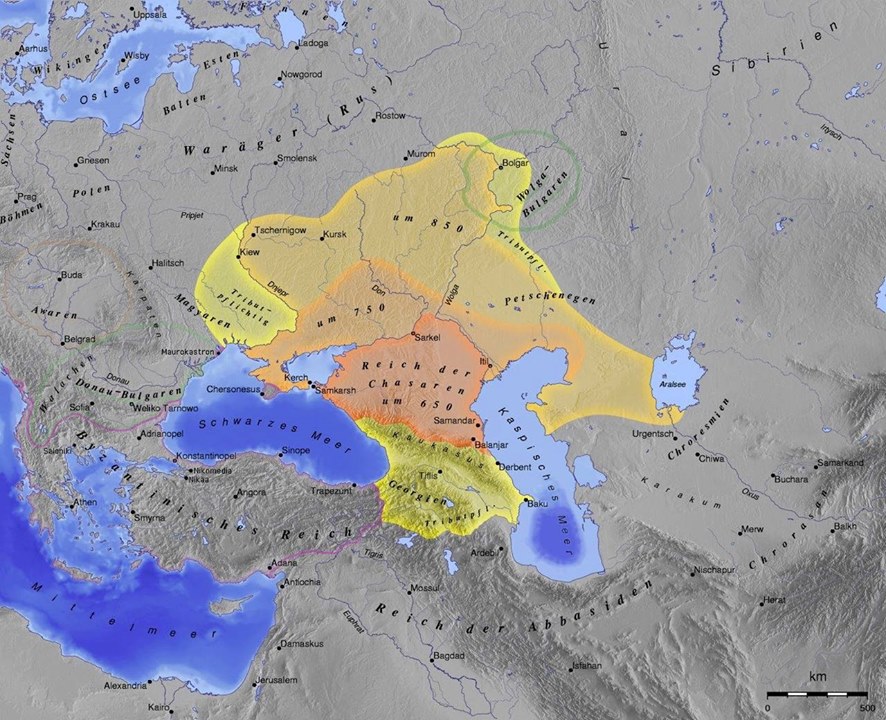
The tribes of Orkhon (Orhon) Turks flourished as the Tang Dynasty in China (618-907 AD) rose to power, gaining control of Mongolia and much of the surrounding region.  This is when significant intermingling of Sino-Chinese and Turkic-Huns occurred, becoming the base stock of the Mongols.  These early Turkic tribes were quite diverse, and some historians claim that reddish hair was predominant among them.  However, numerous tribal groups in the region became sinicized to the point that the vast region of deserts, mountains and grazing land was soon inhabited by people resembling each other in racial, cultural, and linguistic characteristics.  The similarities among those who inhabited the region has caused considerable ethnic and historical confusion.  Thus, the Turks would take on radically different blends of ethnicities, depending on the location of their various tribes.  These early Turkic tribes were quite diverse, and scholars claim they quickly spread out and developed different languages and cultures.  Many of these tribes would come to be known as Turko-Mongols, including the historic Orkhon Turkic clans of Khazars, Uyghurs, Khitans and Kirghiz.  The Khazars migrated from the Asian steppe between the 7th and 11th centuries, settling in the northern region of the Caucuses Mountains between the Black and Caspian Seas (modern-day Russia).  This left the Turkic Uyghurs (Uighurs) and Khitans to prosper throughout eastern Asia, dominating the region by early 10th century.

In the 6th century AD, living to the north were another notable Turkic people, the Tartars, first called Ta-ta the by the Chinese.  They are mentioned by Orkhon Turks on inscriptions from the 8th century.  The Tartars, Khitans, Krighiz and Uyghurs were known for attacking each other, and during the 9th century the Tartars went into subjugation by the Khitans (Kitans), and the Uyghurs were overthrown by the Kirghiz. By the 10th century, the Chinese were reporting that Khans from these various Turkic tribes were regularly battling for regional supremacy.  Migrating Khazars appeared again in the late 10th century as a large Turkish tribe called the Kinik.  Kinik was the son of Oghuz (both were tribal Khans and Khazar Turks).  The Kinik Turks would give rise to the Ghuzz Turks.  Ghuzz fathered Tukak who was the father of Seljuk.  Under the leadeship of Seljuk, the Kinik/Ghuzz Turks became the powerful Seljuk Turk empire. 

At the end of the 11th century, Seljuk Turks dominated Asia Minor (modern-day Turkey).  They produced the most famous Turk in history, Sultan Osman Ghazi (Osman I) who formed the Osmanli (Ottoman) Empire.  Their descendants make up a majority of today’s Turkish population, having integrated with the descendants of Togarmah and others previously established in the region.  About the same time (12th century), the Tartars became a major force in the Asian steppe, where their Khans expanded throughout a vast geographical region, including Europe and Asia, particularly after the 13th century.  They also exercised power over the Mongol tribes, descendants of the Geougen/Ruruan, from the 6th through 13th centuries.

Though the Geougen/Ruruan Khans were overthrown in the middle of the 6th century, their tribal groups remained in tact.  They were a large nation of many tribes, with two prominent “royal” tribes, the Mu-gu-li and the Mengwu-Shiwei (Mengwushiwei), names that were possibly derivatives of their ancestor Magog.  Living in the surrounding region under the Tartars, the Mengwu-Shiwei (also Meng-wu, Meng-ku and Shi-wei) were first mentioned in the writings of the Tang Dynasty in China between 618 and 907 AD.  In the 10th century the Mengwu-Shiweiappear as Mongol-Shiwei in the Chinese book “Jiu Tang Shu” (The Ancient History of the Tang Dynasty).  This has led scholars to speculate the term Mongol (or Mongul) originated between the 7th and 10th centuries AD.  In the late 13th century, Venetian trader and explorer Marco Polo, when traveling to Mongolia, understood the word “Mungul” to be a broken-down form of the word “Magog”, since he came across an association of names “Ung” and “Mungul”, which he considered the counterparts of Gog and Magog.  According to him, the Gog lived in Ung, and the Tartars lived in Mungul.  While some scholars contest any link, it is conceivable that the word “Mongol” was originally attached to these early Siberian Indo-European peoples descended from Magog.

Mongols.  The tribal names Mengwu and Shiwei are used interchangeably by historians, with Shiwei being the primary.  The Megnwu are mentioned only as Mongols by the 12th century.  The term “Mongol” became the common name for the many tribes of Shiwei, as recorded during the Yuan Dynasty (1271-1368).  The Chinese called Shiwei tribes by different names, including the “Huangdou Shiwei” meaning “yellow (blonde) head Shiwei,” and “Maodou” or “Maoshou” meaning “hairy head (bearded)” people. The physical attributes of the Shiwei tribes were that of their Geougen/Ruruan ancestors, from Siberian stock.  This is futher evidenced from the name of a prominent Shiwei tribe, the Borjigin (also Borjigid or Bourchikoun).  The Borjigin were known to have gray eyes and reddish hair.  This clan also had a Khan named Yesugei, the father of Temujin or Genghis Khan (1162-1227 AD).  Chinese descriptions of Genghis Khan indicated he was tall and heavy bearded.  After his death, few portraits show him as described in history, while many artistic interpretations show him with distinctive Asiatic features, contrary to evidence by major authorities.  

Mongolian Mural
of Genghis Khan

European Portrait
of Kublai Khan

Statue of
Tamerlane in
Uzbekistan


Persian historian Abu al-Ghazi Bahadur (1606-1663 AD), considered the most prominent historian of Turkic oral traditions, observed that the family of Yesugei, the father of Genghis Khan (also Chingis Khan, Chinggis Khaan, Jenghis Khan, Jenghiz Khan), were known for their children of fair complexions and blue or gray eyes.  Genghis Khan’s wife, Bourtai or Borte Ujin, bore a name meaning “gray-eyed.”  His son and successor Ogedei (1186-1241 AD) had gray eyes and red hair; his grandson Mangu (1208-1259 AD) had reddish eyebrows and a red-brown beard; his grandson Batu (1205-1255 AD), the first Khan of the Golden Horde, was freckled.  Genghis Khan’s famous grandson, Kublai Khan (1215-1294 AD) had dark hair, which likely came from his mother Sorghaghtani Beki, a princess from the allied Turkic tribe of Keraits.  Rashid al-Din Tabib (1247-1318 AD), Persian physician and historian of Jewish heritage, recorded in his chronicles that Genghis was shocked to find his grandson Kublai had not inherited his red hair.  Another of Genghis Khan’s descendants, conqueror Tamerlane (1336-1405 AD), also inherited the family’s characteristics.  An Arab who was taken captive by Tamerlane, Ahmed ibn Arabshah (1392-1450 AD), wrote that Tamerlane was “tall and strong, with broad shoulders, a large head and high forehead, he had a heavy beard, was white-skinned and had a ruddy complexion.”  This description was confirmed in 1941 when the tomb of Tamerlane was opened, clearly showing he was a man of strong build and imposing stature, with hair of a reddish-brown moustache still adhering to his skull.  Tamerlane was known as a Turkmen-Mongol conqueror who established an empire extending from India to the Mediterranean Sea.  Tamerlane’s name came from a European corruption of Timur-i Lang (“Timur the Lame”) which was given to him because his left side was partially paralyzed.

The story of Temujin (Genghis Khan) is remarkable.  From the oldest surviving Mongolian literary work, “The Secret History of the Mongols,” we have a written record of the royal Mongol family and the origin of their nation, and of Genghis Khan.  Written about 20 years after his death in the Uyghur script, the surviving manuscripts all derive from a Chinese transliteration of the 14th century, currently regarded as the single significant Mongolian account of Genghis Khan.  We are told that when he was a child, his father Yesugei (Yesukai) Khan, was murdered (poisoned) by rival Tartars.  Temujin (or Timuchin) lived his teen years with extended family, and by the age of 20 he would become leader of a sub clan.  Before he was 40, Temujin established strong alliances with surrounding clans, then succeeded in defeating all rival Mongol and Tatar tribes, from the Altai Mountains to Manchuria.  In 1206 his leadership of all Mongols was formally recognized in a Kuriltai (council) which chose him as their Khan.  He then took the title of Genghis Khan, meaning “supreme king” or “universal king,” to signify the scope of his power.

Genghis also popularized the Khanate.  Historians note that becoming a Khan required a number if prerequisites.  First, the Khan had to be the senior member of the clan.  Second, sovereignty rested not in an individual or an individual’s line, but in a clan, a whole clan.  The clan therefore had a right to control the territory over which it reigned, and male members of the clan who had reached their maturity were entitled to a share of the territory.  Political maneuvering often took priority, as Temujin was still a junior member of his clan when he was given the title of Khan.  He used similar tactics to build his empire.  Prior to Genghis Khan’s rule, the Mongols were many disunited clans, and they continued to be after the fall of their ancestors, the Geougen/Ruruan, in the 6th century.  Only the Turkic tribes had risen to power, such as the Tartars, which they fought with regularly.  To accomplish stability, Genghis created a system that would stress the unity of the empire, and would wipe out tendencies towards local tribal authorities.  This enabled him to incorporate many tribes from a vast region, and eventually create the largest contiguous land empire ever.

After Genghis Khan’s death, he was give the title “Khagan” or “Great Khan” (translated as Khan of Khans, equivalent to King of Kings), which is given to a Khan who rules an empire, also known as a Khaganate.  His empire would be split into four sectors by 1260.  One was composed of present-day China, Mongolia, Korea and Tibet (considered the Mongols in China and Mongolia); the second was Central Asia; and the third was West Asia (including present-day Iraq).  These first three sectors would lose their influence by 1368, but the fourth sector, known as the “Golden Horde” in Russia, would be a major influence until 1502.  After the fall of the Mongol Empire, the subsequent people groups established in Asia and Eurasia continue to this day.  In fact, some scholars consider the Mongol Empire to be the beginning of current world history.

For example, many people groups living in Mongolia, Tibet and northern China today are the result of the empire’s split.  The migration west of Khan’s descendants are evidence of that.  The Asian peoples living in present-day Mongolia arrived later, and are not the Hunnic Mongolians of Genghis Khan’s lineage.  Evidence for this can be found in the Ural-Altaic languages spoken in the region, and spoken by Ghengis Khan himself.  These ancient Siberian languages would later become the root for Turkic, Mongolian and Tungusic languages.As early as the 5th century AD, Turks and Asians had formed new ethnicities, depending on the location of their various tribes.  By the 14th century, Genghis Khan’s empire helped spread these new ethnic peoples west, and many of today’s southern Russian republics (including Central Asia) are where these peoples settled, sometimes referred to as Eastern Turks.  There are a number of Turkic languages, including Kazakh, Uzbek, Kyrgyz, Tatar, Uyghur, Turkish, Azeri, Turkmen, and many others spoken in Eastern Europe, Central Asia, Siberia, and parts of China.  The Kazakhs (Turkic people of the northern parts of Central Asia) have an internal group called the Tore who consider themselves to be direct descendants of Ghengis Khan and his family.   

10th century 
Turk from
present-day 
Kazakhstan

Eastern
Turk from
Kazakhstan


Historians have suggested that Ghengis fathered dozens of children, thus his Y-chromosome lineage today features prominently in the population genetics of numerous people groups in Asia and Eurasia.  This is well attested in the historical record as late as the early 20th century, where the aristocracy of Mongolia, which was 6 percent of the population, consisted of his patrilineal descendants.

There are many evidences that link Turks, Huns and Mongols from their earliest formations as tribes of Magogians and Scythians:  (1) their Ural-Altaic languages; (2) their use of Runic inscriptions; (3) their coming from the north; and (4) their extensive use of horses and archery.  Ezekiel describes them in similar terms:  Ezekiel 38:4, “I will turn you around, put hooks in your jaws and bring you out with your whole army – your horses, your horsemen fully armed, and a great horde with large and small shields, all of them brandishing their swords.”  Ezekiel 39:2-3, “I will turn you around and drag you along.  I will bring you from the far north and send you against the mountains of Israel.  Then I will strike your bow from your left hand andmake your arrows drop from your right hand.”

Similarities remain in the languages of Mongolian, Tungusic and Turkic to this day, having many words in common.  These Ural-Altaic languages have been historically considered “Scythian” or “Tatar” languages which make up some 40 languages spoken by about 100 million people.  Examples inlcude Turkish, Kazakh, Kirghiz, Bashkir, Azerbaijani, Uzbek, Samoyed, Oirat, Kalmyk, and Mogol, plus similar languages spoken by peoples living between the Black and Caspian seas.  Other language families, including Finno-Ugric (Finnish, Hungarian) and Balto-Slavic (Russian, Ukrainian, Czech) have affinities to the Ural-Altaic language family.

We know the early Huns and Mongols were a nomadic Siberian horse-riding peoples who would eventually travel west to conquer, subsequently leaving Asian tribes to populate the region known today as Mongolia.  We also know that the Huns became today’s Turks (Turkic peoples), and the Scythians are today’s Russians.  As noted earlier, these people groups would eventually populate present-day Eurasia, including Russia, Siberia, the numerous republics north of Israel as precisely described in Ezekiel 38 and 39.  Gog’s and Magog’s descendants are today the peoples of those regions.  Recent genetic research shows that many of the great confederations of early Asian steppe war tribes were not entirely of the same race, but rather tended to be ethnic mixtures of the Turkic, Tungus, Mongolian, and in many cases Scythian and Iranian (note that today more than 90% of these people groups are Muslim).  The following genealogical chart shows these ethnic relationships:

  |------------------------Noah------------------------|  -----------------------------| -----------|
  |                                                    |                               |            |
Japheth                                               Ham          Genesis 10          |            |
  |-----------|                                        |                               |            |
Gomer       Magog----------|--------------|           Canaan --------------------------|            |
  |           |            |              |            |                                            |
Ashkenaz    Gog-hasan    Donghu         Hiongnu       Seni (Sinites) ------------------|            |
  |           |            |              |            |                               |            |
Scythians<----------------------------->Huns<-------->Sianu (Sino-Asians)              |            |
  |           |            |              |            |                               |  Ezekiel   |
Saka<------>Gogarene     Tungus         Tu-kui         |           Historical          |  38 & 39   |
  |           |            |              |            |           Tribes,             |            |
  |           |          Ruruan         Turks<-------->|           Peoples,            |            |
  |           |            |              |            |           Nations             |            |
  |           |          Mengwu-Shiwei    |            |                               |            |
  |           |            |              |            |                               |            |
  |           |          Mongols<--------------------->|  -----------------------------|            |
  |           |            |              |                                                         |
  |           |            |              |                                                         |
  |---- Peoples of present-day Russia, Siberia, Eurasia, Asia Minor --------------------------------|


Source: Gog and Magog in History by Tim Osterholm
Where Is The Wall Of Yajuj Wa Majuj (Gog & Magog)

6297e7a678737b9246263151cc7ab59cبسم الله الرحمن الرحيم

Assalamu Alaikum; This work serves as one half of our research into this subject and the questions we are trying to answer about Yajuj Wa Majuj, who are they in history, and consequently today? and where is the wall of Yajuj Wa Majuj that Dhul Qarnain built? hence it’s length.

But before we begin we should address a topic relevant to our world today witch we have written about in our book on Syria and Signs of the hour, in the chapter entitled “The World Will Be Split Into two Camps“, a reference to the famous Hadith of the prophet (saws) about the worst oppression this world will ever face regarding which He (saws) said “the world will cry for it’s inhabitants”.

There are people today who claim they are muslims but don’t believe in Yajuj wa Majuj or deliberately distort and lie about them, because this matter is spoken of in the Quran, these people have left Islam by denying or lying about it, they are part of the camp of Hypocrites, one of the two camps the prophet (saws) said the world will split into in our time mentioned in Ahadith. Allah doesn’t accept them or their “version” of Islam, He has made this very clear in the Quran and Sunnah. What else should be clear is that Allah has prepared the lowest and deepest part of Hell specifically for the camp of Hypocrites that is today forcing people to adopt their ways, literally killers, mass murderers and all people of Hell will be in a lighter place of Jahanam (Hell) in comparison to them.

This is because Allah and His prophet (saws) repeatedly declared that the camp of hypocrites in our time are the worst and lowest people under the sky, they took up every high position in every society on earth through degenerate means until they left no place for the people (camp) of religion, or allowed any place to accept them, put simply the lowest people to walk this earth are the lowest people on the day of judgement and in Hell, such are their crimes in Allah’s scales and what they did to their own selves and the rest of mankind.

They think they along with their devils (2:14) have won the world but they are ignorant of the spiritual realities that exist in this universe from the first moments it was created, if you believe in your devils then also believe in the God that put them here on earth long before man ever set foot on it. Allah created the system the world exists in, and man is in a continual state of loss in this environment unless he achieves a just society that creates an atmosphere which can protect him from it, otherwise the system will take this world they have built, from any society that cant pay this perpetual debt, Allah swore by this;

“By (the passing of) time (through the Ages), (1) Verily Mankind is in (a state of) loss, (2) Except those who have Faith, and perform righteous deeds, and (join together) in the mutual teaching of Truth (in society), and exhort each other to observe patience”. (3)

This debt is built into man’s body itself; the prophet (saws) said “A debt is due for every joint in each person on every day the sun comes up: to act justly between two people is a charity (pays this debt); to help a man with his mount, lifting him onto it or hoisting up his belongings onto it, is a charity (pays this debt); a good word is a charity (pays this debt); and removing a harmful thing from the road is a charity (pays this debt).” (Bukhari, Muslim) the debt the body is owed is the baraka (spiritual nourishment) it requires to function properly and these acts pay that debt by generating it.

Nothing else can take man out from this state of loss, and the disappearance of all good from the universe as the prophet (saws) declared will begin it’s eventual destruction, there is no permanent or lasting victory for evil, there never has been. Iblis (Satan) who gave these people access to his Jinn around the world  knows this very well, their master plan for society is only a pyramid scheme (pun intended) for people to buy into it, something to live for and die for that can never be fulfilled the nature of the universe is continual change and no belief system remains new, the Pharaoh’s of Egypt who built the first empire based on the occult found this out first hand. Iblis who witnessed all this knows very well he can achieve nothing more in this world than to fulfil the oath he swore against mankind’s father Adam, in front of Allah.

A simple search for the names and levels of Hell will show that every scholar agrees, the lowest level of Hell has always been reserved for this camp of hypocrites, it was the bible which described them best, “I saw that the (western empire) was drunk with the blood of God’s holy people (the camp of religion), the blood of those who bore testimony to Jesus”(rev;17:6), the personal lives of Muslims who bare testimony to his prophet hood. The camp of hypocrites uses the lives of people just like Pharaoh used the lives of Jews, it wasn’t their physical labour he used to fuel the occult in his society but his control over their personnel lives. Likewise it is why this camp is pushing for more control over people, allowing them to get spiritually drunk of the light of the purest people on earth, all of this is spelt out crystal clear in Allah’s revelations, the occult is just an evil form of spirituality. The end of Pharaoh’s society was that Allah sent them Moses with what is real and undeniable to try and snap them back into reality and out of the lizards hole they crawled into and came to depend on, the same lizards hole the west has gone down in imitation thinking there is no other way.

Lying about religion is lying about your identity and this is the hypocrisy, “HAST THOU ever considered

[the kind of man] who gives the lie to all moral law?”…”Hadst thou considered one who denies this way of life?”…Have you seen him who denies the Deen?”(107:1), the choice with Allah for them is simple, “this life or the next”, if you choose the next then endure this life as a Muslim, there is no in between that will be accepted from anyone, that is why the prophet (saws) in strict terms declared the world will be split into two camps, the camp of hypocrites which has no religion and the camp of religion which has no hypocrites, you cant have any of their “hypocrisy” in you and be in the camp of religion.

When the Dajjal (Allah’s curse be upon him) takes control of the camp of hypocrites when he emerges, and the system they invented to control the world, the people of religion at that time will be unable to fight him, then Eysa ibn Maryam will descend, and will call (out to) the people at dawn saying: “O people, what prevented you from coming out to fight this evil liar?” They will answer, “He is a jinn”…he isn’t human, this is what the camp of hypocrites are doing to themselves today and Allah mentions it in the Quran, “And of mankind are some who say: We believe in Allah and the Last Day, when they believe not…And when they fall in with those who believe, they say: We believe; but when they go apart to their devils (Jinn) they declare: Lo! we are with you; verily we did but mock.”(2:8,14)

People should realise of all the creatures Allah gave intelligence to the Jinn are the dumbest, they only surpass man in the strength of their will and ability to force people to adopt it, they are almost incapable of wisdom, Iblis is a prime example of this. When Allah showed Adam (as) to the Angels for the first time and asked them to prostrate to him because he could know things they couldn’t know like him, Iblis rebelled because of his strength not intelligence a subject not even related to what Allah was exhibiting in front of the Angels. A rock has more strength than this imbecile but it’s level of intelligence is useless to Allah, the Angels who all had more strength than him understood this and prostrated. The devils that the camp of hypocrites use and follow, are physiologically almost incapable of foresight, so they can only live from day to day and moment to moment, this is why of all of Allah’s creatures they fall into their own folly and hubris the most, such is the story of Iblis who lived in the most perfect and pure place Allah created but it never touched his heart.

Everything the Jinn have falls short of it’s full measure because of their nature, the reality of Baraka in something which man needs, is that it is the full measure and beauty that all things are capable of achieving, it isn’t Mamsukh, deformed by Maskh like the Jinn are who practice it on each other and mankind, it is their way of life, this is why Maskh is used today as a weapon against man, it brings him down to the size of the jinn intellectually so ultimately Iblis can achieve his oath against us, his pyramid scheme is nothing more than an intricate dance to no where.

Man achieving wisdom is the only thing that can break the hold of the Jinn on him, that is the aspect of man that is beyond them it requires depth of spirituality and we surpass even the Angles in this regard, which was the essence of the example Allah was setting for the Angels when He displayed Adam to them and the meaning behind verse 53:9.

Maskh is how the Jinn long ago convinced man his god was an idol made of stone and wood, today it is used behind the scenes against people to sell belief in their system and products, and what they are doing. The prophet (saws) swore by Allah himself that this would occur to His community, the Prophet (saws) said, “By the One Who has sent me with the Truth, this world will not come to an end until they are afflicted with Al-Khasf (earth- quakes), Al-Qadhf (Bombardment), and Al-Maskh (emergence of people who perform maskh on other’s i.e stunt people’s intellects, the deliberate dumbing down of society through Maskh using the Jinn).”

Where Is The Wall Of Yajuj Wa Majuj ?

Bismillahi Rahmani Raheem

Gog and Magog are normal human tribes descendant from Noah’s son Japheth (as) through his son Majuj (Magog) from whom arose Turkic-Slavonic-Mongol races. The Prophet (saws) described them as being well-built and having red hair, small eyes and wide, flat, shield-like faces. There is no mystery about the people themselves Islamic scholars have known who they are for a long time, the mystery is only on how to interpret the Ahadith regarding them in a logical and sane manner, which is what the scholars demanded of all Tafsir.

Imam Ibn Kathir writes; “Gog and Magog are two groups of Turks, descended from Yafith (Japheth), the father of the Turks, one of the sons of Noah. At the time of Abraham (Musa (as) dates to roughly 1350BC or earlier), peace be on him, there was a king called Dhu’l-Qarnayn. He performed Tawaf around the Ka’bah with Abraham, peace be on him, when he first built it (the kaaba); he believed and followed him. Dhu’l-Qarnayn was a good man and a great king; Allah gave him great power and he ruled the east and west. He held sway over all kings and countries, and travelled far and wide in both east and west.”

The prophet Muhammad’s enemies challenged him to tell them about “the mighty traveler who reached the confines of both East and West.” literally, “the easts of the Earth and the wests of it”… the prophet answered “Roads were stretched out before him until he traversed the whole earth, east and west. He was given power over every land he trod on until he reached the farthest confines of creation”. (Ibn Ishaq)

Allah says in the Quran, “They ask thee concerning Dhul-Qarnain. Say, “I will rehearse to you something of his story. Verily We established his power on earth, and We gave him the ways and the means to all ends. One (such) way he followed. Until, when he reached the setting of the sun, he found it set in a spring of murky water, and found a people thereabout. We said: O Dhu’l-Qarnayn! Either punish or show them kindness. He said: As for him who doeth wrong, we shall punish him, and then he will be brought back unto his Lord, Who will punish him with awful punishment! But as for him who believeth and doeth right, good will be his reward, and We shall speak unto him a mild command.”

“Then he followed a road Till, when he reached the rising-place of the sun, he found it rising on a people for whom We had appointed no shelter therefrom. So (it was). And We knew all concerning him.”

“Then he followed a road Till, when he came between the two mountains, he found upon their hither side a folk that scarce could understand a saying. They said: O Dhu’l-Qarneyn! Lo! Gog and Magog are spoiling the land. So may we pay thee tribute on condition that thou set a barrier between us and them?”

“He said: That wherein my Lord hath established me is better (than your tribute). Do but help me with strength (of men), I will set between you and them a bank (barrier). Give me pieces of iron – till, when he had levelled up (the gap) between the cliffs (The valley walls), he said: Blow! – till, when he had made it a fire, he said: Bring me molten copper to pour thereon. And (Gog and Magog) were not able to surmount, nor could they pierce (it). He said: This is a mercy from my Lord; but when the promise of my Lord cometh to pass, He will lay it low, for the promise of my Lord is true.” (18:83-98)

Dhu’l Qarnayn traveled the earth until he reached “maghriba al shamsi” (86) the setting place of the sun, then he traveled until he reached “matli’aa al-shams” (90), the rising place of the sun. Maghrib used in the Qur’an and Ahadith is a common Arabic idiom for the west. Imam al Qurtubi and other commentators understood the rising and setting to mean the extreme places of the west and east, which is Africa and China, beyond which is nothing but the ocean.

The sun rises towards the east (China) and sets towards the west (Africa) which mean the far east and west.

He thus traveled west toward Al-Ayoun and Al-Khalidat or the Canary Islands by the Atlantic Ocean in west Africa. From Dhul Qarnayn’s perspective, it seemed as if the Sun set in ‘Haamiya’ or murky boiling water in fetid commotion. Some thought that Muslims believed the Sun Actually sets in water, but the Quran states that the Sun has an orbit in space. The Canary Islands are a chain of volcanic ocean islands, the islands are the example of oceanic hot spot volcanoes above a slow-moving, thick oceanic plate. The islands would have been volcanically active at the time forming Lanzarote’s caves by steam in the lava face.

Hence the Quran saying He reached the setting of the sun is talking about His intent to travel, it was to find the place the sun set, because at that time this was a common thought and reason people traveled the world, to find where the sun set or rose which was done by traveling to the far east or far west, he did both unlike others, such journeys are often mentioned in mythologies like that of the vikings. Thousands of years ago only the prophets understood what the sun was, hence the verse “he found it set in a spring of murky water” is a statement about the water it seemed to set in of the coast of Africa, and his state of mind and belief about the sun, to most people who believed the earth was flat back then this was the end of the world itself.

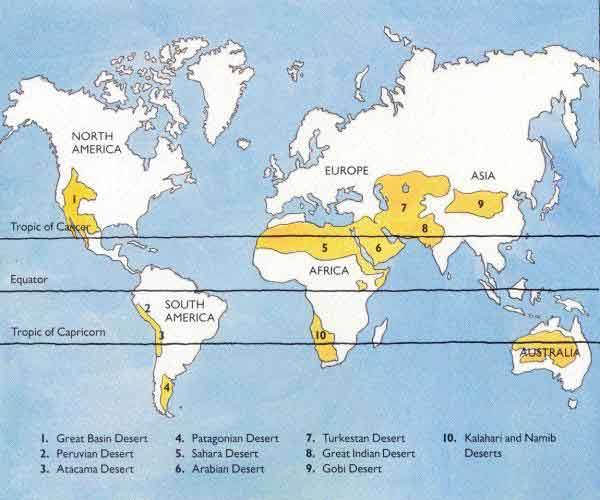
He then traveled to the easterly part of the world and “he found it rising on a people for whom We had appointed no shelter therefrom,” which means China’s deserts. China has some of the largest deserts in the world spanning from one end of it almost to the other along it’s northern borders, which would equate relatively with the line from west to east Dhul Qarnain traveled. So his journey passed through the deserts of China reaching the Gobi desert and further possibly to the coast, it is possible thousands of years ago the desert reached closer to the coast than it does today. The people where described as those who found no shelter from the sun, but that doesn’t mean every region of their land was like this, it is a characterisation of the people found in Northern China which was multiple countries and people in those times. The capital City of China Beijing is relatively near the Gobi desert, and the Yellow Sea on China’s coast is near it.

In terms of land mass the furthest land mass in the east of the world is to the north in Russia, the earth curves that way, but that land is in the North of the Earth and mainly cold and desolate with little inhabitants. Dhul Qarnain would have to have deviated from his east west travels to head far North then east to get there, if we follow the coast and curvature of the world, and having no map of the world telling him technically there is more land in an easterly direction to the far North, this doesn’t seem likely because the Quran states he traveled the east and west of the earth only, and in a relatively straight line.

Having said all that the verse “he found it rising on a people for whom We had appointed no shelter therefrom” could mean if he did travel north to North Eastern Russia that it is referring to the people of the North who experience sunlight for months on end, and have no shelter from this extended day.

But then again that goes against the idea of finding the setting place and rising place of the sun if you are in a location where it doesn’t set or rise, which is the hallmark of the verses in the Quran, in either case this has no bearing on location of the wall of Yajuj wa Majuj which is back in the opposite direction.

Imam Qurtubi said “It is not meant by reaching the rising or setting of the sun that he reached its body and touched it because it runs in the sky around the earth without touching it and it is too great to enter any spring on earth. It is so much larger than earth. But it is meant that he reached the end of populated land east and west, so he found it (the sun)– according to his vision – setting in a spring of a murky water like we watch it in smooth land as if it enters inside the land. That is why He said, ‘he found it rising on a people for whom we had provided no covering protection against the sun.’ (Holy Qur’an 18:90) and did not mean that it touches or adheres to them; but they are the first to rise on. Probably this spring is a part of the sea and the sun sets behind, with or at it, so the proposition takes the place of an adjective and God knows best.”(al-Qurtubi (died 671 AH/1273 CE) Al-Game’ Le Ahlam-El-Qur’an)

1

The Gobi Desert (9) in China at the most easterly tip reaches above Beijing which is mid way between it and the coast, we Have to remember this is all prior to China being populated like it is today, the Map above is also accurate to the curvature of the earth showing an accurate east and west, the tropic of cancer line is fairly close to the path Dhul Qarnain would have taken, but because of the natural land features and himalayan mountains in the east (between 7,8 & 9, running above india to the tip of 8) it would have taken him more north towards the Gobi Desert (9) as He traveled towards China, so in the east His journey would end closer to where Beijing is today.

Dhul Qarnain first travels west to Africa, then He traveles East to China, which would have ended His Journey covering the expanse of the earth, after visiting China He travels back towards Arabia which is as it’s name suggests, the middle east, is in the middle, “Then he followed a road, Till, when he came between the two mountains, he found upon their hither side a folk that scarce could understand a saying.” therefore we know the wall can’t be in the furthest east or west of the earth but somewhere on his travels back, the evidence for the location of the wall are many.

Ahadith themselves gives us a key clue to where it is because some of the companions traveled in the prophets (saws) lifetime saw the wall, and returned in the prophets (saws) lifetime and the prophet (saws) affirmed they had in fact seen it; Imam Al-Bukhari transmitted in his Sahih the following Hadith: A man told the Prophet (saws) that he had seen the dam of Gog and Magog. The Prophet (saws) asked: “How did you find it?” The man said: “I found it like Al-Burd Al-Muhabbar (striped garments).” The Prophet (saws) said: “You have seen it.”

In Ibn Jarir’s exegesis of the Qur’an, it was reported by Qatadah that when the man told the Prophet (saws) that he had seen the dam of Gog and Magog and was asked to describe it, he said: ‘It looked like striped garments, with red and black stripes.’ The Prophet (saws) said: “You have seen it.” these may not have necessarily been it’s only colours.


The wall could have been made of all metal, like a giant wall of iron (black) with Brass (red) poured on it and throughout, giving the entire wall a stripped look, or it could have been a giant wall of stone with Iron and Brass used in the construction to hold the Giant stone blocks together and in some way used on the surface giving it a stripped look. This depends on how much Iron and Brass the local people where able to provide Dhul Qarnain.

Allah says in the Quran, “He said: That in which my Lord has established me is better, therefore you only help me with workers, I will make a fortified barrier between you and them; Bring me blocks of iron; until when he had filled up the space between the two mountain sides, he said: Blow, until when he had made it (as) fire, he said: Bring me molten brass which I may pour over it. So they were not able to scale it nor could they make a hole in it. He said: This is a mercy from my Lord, but when the promise of my Lord comes to pass He will make it level with the ground, and the promise of my Lord is ever true.” (18:95-98)

The Quran suggests it was a Giant solid Iron wall with brass poured on top, but the translation could read that He continuously used iron until He filled the Gap (with Stone), then used Molten Brass on the Surface giving it the stripped look, we can only assume the black is from the iron metal.

A unique legend that existed among the Tartars (one of the major Majuj tribes) is that the wall of Dhul Qarnain was ‘magnetic, causing all iron equipment and weapons to fly off toward the mountains on approach’, a quality that is possible for a giant Dam built from Iron and Brass, hence it is entirely possible the Quran meant it was a Giant Iron Dam, which we will assume in this work.

What is significant about the location of the wall is that one of the companions traveled North out of Arabia found the wall and came back in the prophets lifetime to tell him about it, hence the wall has to be located within reasonable traveling distance of Arabia and not at the extreme ends of the earth.

A more significant piece of evidence than this is the fact that Yajuj wa Majuj are descendant from Nuh’s (as) son Japheth who had a son named Magog, and we know where the sons of Nuh (as) and their descendants migrated to around the world, and which nations of the earth come from which Son, it is fairly common knowledge among scholars.

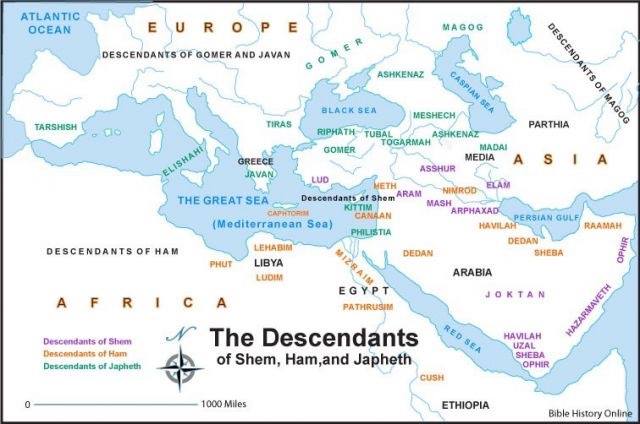
Here is a Map showing how the sons of Nuh and their children migrated around the world, you will see clearly where Magog and His children settled after the flood in the top right of the map.


Notice that North of the Caspian Sea and to the East are the lands of Magog and to the west where it says Gomer, Allah in the Bible says these are the Lands of Gog (Eizikiel 38), basically large parts of Eastern Europe, Russia, Southern Russia and Asia.

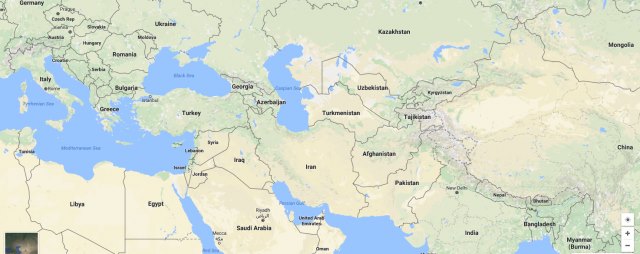
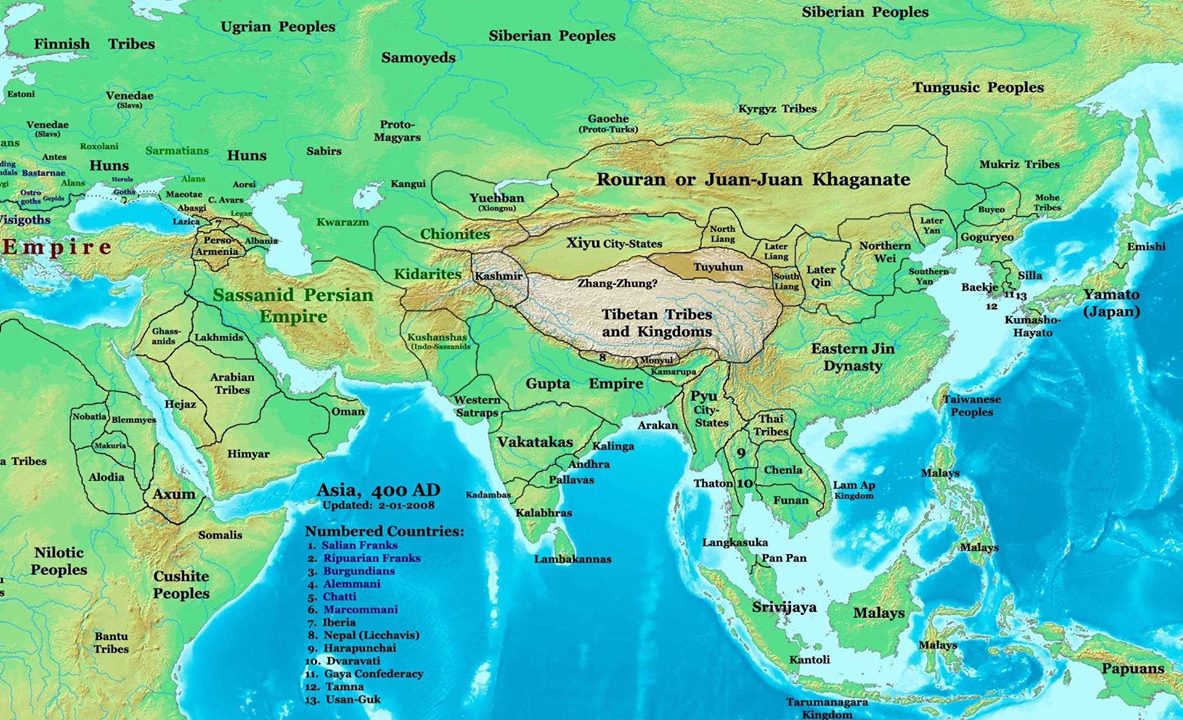
This is a Map of the most relevant part of the world in trying to locate where the wall is;


We know the wall is not in the north or the south, or the extreme easts (China) or extreme west (Africa) and it has to be within reasonable travel distance from Arabia, because we know right after He built it He continued to Arabia and performed Hajj with Abraham confirming it’s relatively close location, his travels more than likely ended after performing Hajj which is a customary act at the end of a persons life or achievements, and because we know he believed and followed Abraham therefor he spent time with him. Another Quality of it’s location is that it must be in a place where the people it is blocking on one side of it can’t simply go around the mountain with ease, because it’s meant to have stopped them from attacking their neighbours for well over a thousand years.

All of this tells us the wall must be located somewhere in the centre regions of the map above, between Bulgaria in the west just past Turkey, and Northern Afghanistan in the east, just past Iran, it borders the himalayan mountains, on the other side of which is China. Heading towards China, Dhul Qarnain would have passed well north of here to avoid the himalayan mountain range which starts here and spans southwards on the Map covering the northern border of India, creating a natural barrier between it and China.

The verse in the Quran gives us the best clue, “Then he followed a road, Till, when he came between the two mountains”, the last road he follows must be in a different direction than east or west because the third road is mentioned seperate from his first two roads already mentioned in previous verses, looking on the Map this must be in a North direction and can’t be south.

On His route back past the himalayan mountains and between the caspian sea that is further west, if we look south toward the ocean there are no significant mountains ranges (Sadafain/barriers) and the tribes of Yajuj wa Majuj are to the North, looking at the world map above, the wall can’t be in Turkmenistan or Uzbekistan because building a wall there would make it obsolete when tribes find a way around it.

It can’t also be in Bulgaria in Europe because that is to far west out of the lands of Majuj (but not Yajuj) and isn’t a path anywhere near Dhul Qarnain’s Journey back, he would have to have taken multiple paths to get to Bulgaria but the Quran says the third path was off of the first two. The Quran in it’s description is entirely perfect and accurate, because it leaves us with one location we can be certain of which is perfect in every sense including the fact it is directly off of his west-east travels.

The last thing we have to understand is that this wall is a normal wall made from normal materials but Allah granted a miracle to Dhul Qarnain, in that He repaired it after Yajuj Wa Majuj did damage to it, it was a large metal Dam and every day they would make a whole from their side of it to the other, about the size of a small notebook but Allah would repair it during the night as if nothing happened.

Hence it was Allah alone who stopped the wall from being destroyed and not the material it was made from, and it was Allah alone who stopped the people of Majuj from climbing over it or going around it, Allah placed a veil (barrier) over their minds stopping them from finding a real solution to it, because as the ahadith state each day they go back and repeat what they did the day before as if they learnt nothing from the experience, this is also the opinion of many scholars, this fact is important in understanding what Allah meant in the Quran when He said He will release them against the world at the end of time, because in this verse the wall is not mentioned, instead a general statement is made about the people being released, which can mean other things than the wall is holding them back from trying to take over the world.

Something the tribes of Yajuj wa Majuj are historically known for and attempted multiple times through various empire they established, this becomes clear when we identify who these tribes are in history. The two most known are the Hun’s who’s most famous ruler was Attila the hun who challenged the Roman Empire and marched his armies almost to Rome and all the way to Paris, and the Mongol Horde whose most famous ruler was Ghengis Kahn, He almost destroyed the Islamic khalifate’s and wold have conquered Europe had the Mamluk Khalifa in Syria not stopped them, they also succeeded in conquering China and establishing a Majuj empire there.

Yajuj and Majuj are not magical underground people who live in an invisible land that scientific equipment and satellites can’t find, their numbers on the day of judgment would mean what ever cave people wrongfully assume they are in, would have to be larger than Canada if they are cramped in it together, while the Quran clearly says the wall was built between two mountain barriers, a valley in the middle of a large mountain range, and not a cave entrance, “Till, when he came between the two mountain barriers, he found upon their hither side a folk that scarce could understand a saying” (telling us Majuj lived under the sky opposite these people they are attacking).

We also know the Wall was made from blocks of Iron with Molten Brass poured on top of the Iron blocks, so that the molten brass and iron blocks looked like a stripped garment, meaning the wall has a distinct look unique to it, Most ancient walls are made of stone therefor this narrows down the identity and possible location of the wall even further.

If we ask our selves one simple question, we can best determine where the wall is on earth; “Where can we place a wall on the earth which will stop people from going around it easily”

Dhul Qarnain was the first in history to build a wall to block the people of that land above the caspian see, this was a sunnah he began, these turkic-hun-mongol-tartar-russian0 European people caused so much trouble through out history that the actions of Dhul Qarnain inspired other civilisations to use the same solution against the same tribes of that land and a few famous walls where built, here are four of the most famous walls that classical Islamic scholars and historians believed where the wall:

  1. The Great Wall of China 7th-2nd century BC. If you look at the map of china the wall starts on the east coast in Korea and passes over Beijing towards the south-west from there.
  2. The wall in central Asia in southern Uzbekistan (just north of Afghanistan) in a place called Derbent (a number of places share this name).
  3. The wall in Dagistan Russia also known as Derbent on the coast of the Caspian sea, it is a border fortress between two walls stretching from the mountains to the sea.
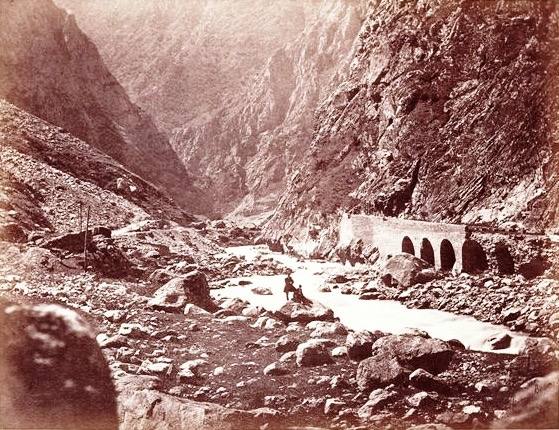
  4. The wall of Darial Pass which is between Gorgia and southern Russia in the Caucasus mountain range.

We can see from this list what scholars believed about the wall, that it was located in a part of the world that is known and near the lands of Majuj on it’s borders stopping them from harassing a neighbouring people, it isn’t magically hidden from people, and the tribes of Majuj are a people like any other people they easily identified.

We know from the path Dhul Qarnain took the tribes of Yajuj wa Majuj where located north of the wall and attacked the people south of it, because Dhul Qarnain traveled east and west then back towards Arabia and followed a road North into a valley, in a direction other than his previous travels, the distinction the Quran makes.

If we focus Just North of the Arabian peninsula, the wall can not have been to the far west which would have located it in Turkey. North of Turkey is covered by the Black Sea, not a tribe attacking people to the south of them. Looking east we will find Iran, Turkmenistan, Uzbekistan and Afghanistan, looking closely on the map none of these places are ideal for placing a wall that would permanently block people from the north heading south, there are to many open spaces, most mountain ranges have multiple routes through or around them making the wall obsolete fairly soon after it was built, but this wall lasted for a few thousand years.

Any further east and we hit the Himalayan mountain range, on one side is China on the other Hind (Pakistan and India).

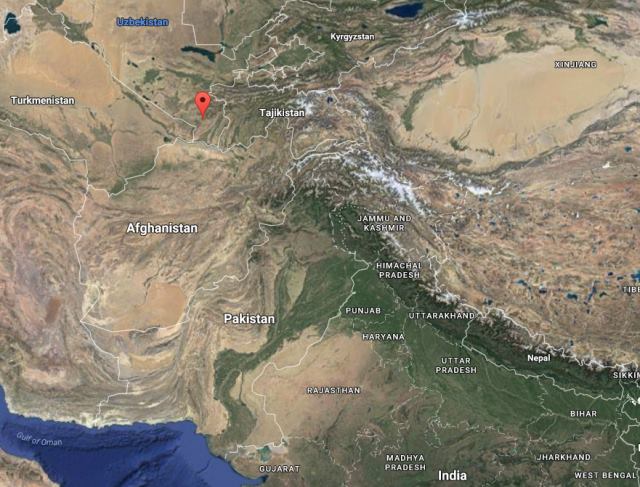
The Derbent wall in Uzbekistan is marked on this map, and the Himalayan mountains are North of India and run into Pakistan, it is the dark raised Area on the map.

The Himalayan Mountains, Uzbekistan, Turkmenistan and Afghanistan are to far from the Arabian peninsula, had a wall been built in these lands Dhul Qarnain would have had to block a number of valleys to stop all travel south or build a wall almost larger than the great wall of China. Another important point is that the wall of Derbent in Uzbekistan, was besieged by Alexander the Great at one point who severely damaged it, later it was strengthened over the years but no longer stands today. A Sogdian warlord (formerly part of the Persian Empire) by the name of Sisimithres rallied his armed followers against Alexander and entrenched them beyond a cramped fortified pass at the Iron Gates. “This site was apparently reinforced by a wall like the one built later, still visible today. The natives sheltered in a rocky fortress protected by a narrow defile and a raging river. Well stocked with supplies, Sismithres had been joined by other warlords in what seemed to be an impregnable hideout.”

Sogdiana, a small land, became independent of Persia until it was conquered by Alexander the Great. What is important about this location is that, the now independent and warlike Sogdiana formed a border region insulating the Achaemenid Persians to the south from the nomadic Scythians (the tribes of Yajuj Wa Majuj) to the north and east, meaning this wall, fortress and it’s people is utilised in the wrong direction and against the wrong people, the Persians. Eventually Alexander won the siege, but from the description of the event and the wall which was not made from Iron and molten Brass, this can’t be the wall of Dhul Qarnain.

The Quran also gives the clearest picture for the type of mountains the wall was built in, “Until when he reached (a place) between the two mountain Barriers, he found on that side of them a people who could hardly understand a word.”(18:93) the sentence in arabic literally reads “between the two barriers” (Sadayn), the translations mention two mountains only because the word in arabic (Sadafain) means the mountains form a natural barrier and has a valley in the middle of it separating it’s two halves, on both sides of the valley passage through the mountains are immense mountainous barriers (Sadayn) or ranges stretching a vast distance.

In fact many translations read, “Until he reached the area between the two barriers”, “Until, when he reached (a place) between two mountain-barriers”, “When he reached [the place] between the two barriers”, hence the Quran is telling us the wall is located in a giant mountain range with a natural valley passage in the centre of it, this clear description limits the possible locations considerably.

An example of huge mountains forming a natural barrier is the Himalayan mountain range which stretches from about Afghanistan, south to Pakistan then North India, they cover the entire northern border of Pakistan and India forming a natural barrier between Pakistan and India on one side of the mountain and China on the other side.

All of these reasons are why none of the first three walls in the list above can be the wall of Dhul Qarnain. The second and third walls are ordinary walls attached to forts whose history can be traced to local civilisations and not located in the middle of a mountain range that forms a natural barrier between two peoples on either side. We have the history of these walls today because of modern historians who did the research, this is knowledge that wasn’t available to islamic scholars who would have concluded as we have.

The Wall Of Dhul Qarnain

Only one of these wall’s matches the criteria of everything we have said including the most important points mentioned in the Quran, the mountains are a mountain range forming a large natural barrier between two lands and the wall was built in a valley, reached by a road off of Dhul Qarnain’s path that deeply cuts into the mountain ranges and is near the Arabian peninsula.

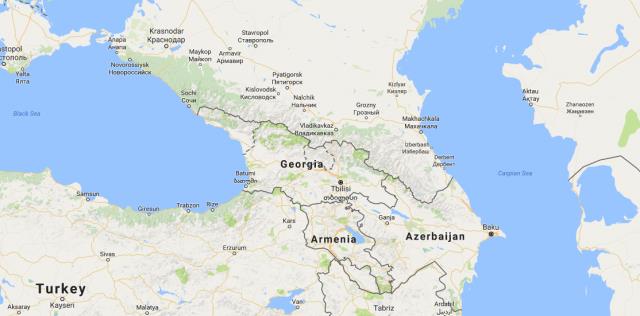
This wall is located in the Caucus mountain ranges which forms a natural barrier between Southern Russia, the historical lands of Yajuj wa Majuj, and Georgia stretching for 1200km (750mi), what is unique about these mountains is that they are like a large solid wall well over five thousand ft high, stretching consistently between the Black Sea on one side of it and the Caspian Sea on the other, without stop until we reach the coasts of both inland oceans, it was from these lands for example, that later the Huns would threaten the Roman Empire and eventually march across Europe and into France, the wall would have been standing in their lifetime stopping them from going south which is probably why they focused on Rome and Europe.

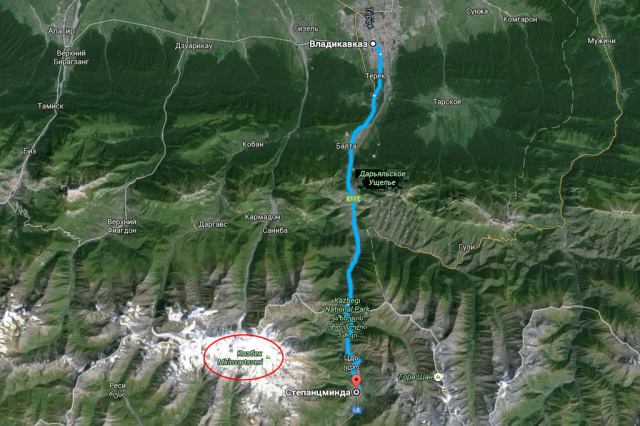
Another feature of this mountain range is that Historically for thousands of years there has only been one natural passage through the mountains which goes through a narrow valley with very high walls on both sides, exactly as the Quran describes (Sadafain), this was the only way through the mountains. It connects the area north of the mountains to the southern area, it is the main pass which runs for 220km from Vadikavkaz in Russia to Tbilisi in Georgia.

Even today there are only three roads from southern Russia to Georgia on the other side of the mountain range, two recently built roads that hug the coast lines around the mountains and one through it using this pass. Because the mountains stretch right to the water, they had to cut through them using heavy machinery in places.

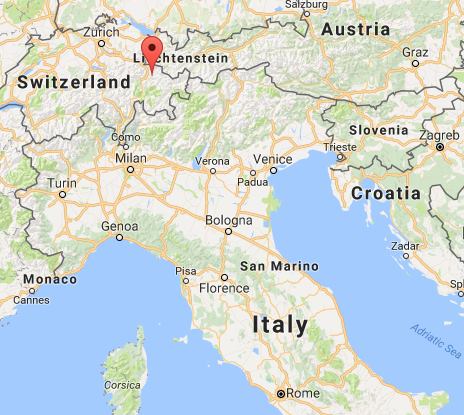
One of military Histories greatest natural barriers are the Alps in northern Italy, they protected the North of Rome from invasion throughout it’s history, until the Carthaginian general Hannibal built artificial passages over and through it, and marched his army on Rome sacking it. The Caucus mountain range runs the exact same length as the Alps 1200Km (750mi) and forms the same natural barrier, one of the few places on earth that would form a natural barrier stopping an army from going around it with ease.

[The Alpes start right on the coast in Monaco, going north through Switzerland, then into Austria and the coast of Slovinia]

To go around the Wall of Dhul Qarnain, the tribes of Majuj would have to travel all the way to the coast on the caspian sea hugging it then heading south into Azerbaijan, passage towards the black sea would have been impossible at the time because the mountain stretch’s to the water with no natural roads. All of this is assuming the coastal region near the caspian sea wasn’t covered by dense forest a few thousand years ago, historical evidence says this was not a possible passage at the time. This would have forced them to travel around the gigantic caspian or black seas on either side, then through either Turkey or Iran heading north into Georgia.

A huge journey and a great effort to simply harass a people, which is the quality of the troubles Majuj and Yajuj where causing, they where not at war with the Georgians but Mufsideen (corruptors) of the land and their society.

Other Qualities that tell us this is the correct location besides the fact the Caucus Mountain range runs the length of Georgia’s and Azerbaijan’s borders and into both seas, is that they are just North of the Arabian peninsula within reasonable travel distance for the companions, and are about the half way point of Dhul Qarnain’s Journey from the west to the east just off his path, close enough for him to go on hajj soon after the completion of his journey, which as it is described by Allah in the Quran building the wall was the last part of it.

Any other place on earth would have taken years of travel to arrive in Makkah, more importantly it is the only mountain range in the region perfectly fitting the Quran’s description and every point we have raised.

The road Dhul Qarnain followed between the mountains is called the Darial pass, located in Darial Gorge where the wall was built. It is at the east base of Mount Kazbek, between vertical walls of rock 1800 m/5900 ft in height, the pass today traverses this mountain range at altitudes of up to 3,000 metres (9,800 ft), it is marked below.

Generally Islamic historians like Mas’iidi, Istakhri, Hamawi and others – identify the Wall located in Darial gorge, or the one at Darbend by the Caspian Sea as the Wall of Dhul-Qarnain. But a famous Islamic scholar Yaqut al-Hamawi (d.1229) known for his encyclopaedic books wrote in his work the Dictionary of Countries that the wall of Darial Pass was “constructed with molten copper.” (Da’iratul-Yaqut al-Hamawi in Mujimul-Buldan, v. 8, p. 9)

The Darial Pass was historically important as one of only two traditional crossings of the Caucasus mountain range, the other being the Derbent Pass near the caspian sea, which was fortified by around 150 BC, it’s worth noting that the level of the Caspian was formerly higher and that the lowering of the water level opened an invasion route around the mountain that had to be fortified. Very literally soon after it opened the tribes of Majuj to the North (the Huns) began looking for ways around but they faced the might of the Persian empire who controlled this region and constructed the barrier and fort found there today which deterred them.

This tells us in Dhul Qarnain’s time passage through here was not possible because of the water level and the tribes would have had to go around the caspian sea to head south, running into large empires before completing their Journey.

The first intensive settlement in the Derbent (Darbend) area dates from the 8th century BC, which predates Ibrahim (as) and Dhul Qarnain; the site was intermittently controlled by the Persian monarchs, starting from the 6th century BC up until their conquest by Islam in the 6th century AD. Until the 4th century AD, Derbent was already into the Sasanian sphere of influence as a result of the victory over the Parthians, both are Persian Empires, they are reported to have built the fortifications, hence the coastal area was under the rule of one Persian empire after another, who repelled them with this wall, possibly inspired by the original wall of Dhul Qarnain.

We know where the lands of Yajuj wa Majuj Historically are, and the Darial pass wall is located exactly on the border of their historical lands, if we look at the map of the descendants of Nuh (as), Majuj are North east above the Caspian sea and Yajuj are North west above the black sea, they used to travel south through this pass between the huge mountains into present day Georgia to harass the local people, eventually as one of their empires fell another replaced it.

From the first century AD one the first Major Empires to control this region where the Huns, after them the Khazar empire arose (618AD-1048), the wall would have been standing in their time and it was to this last empire that the prophet (saws) made Dawah on the night of Isra wal Miraj, spoken of in Ahadith, they didn’t accept Islam at the time but unlike previous majuj empires who where pagan, they eventually began to consider adopting one of the three religions of the book, accepting Judaism in the end, the prophet (saws) setting them on a path other than their historical one.

The following Map of the world in 400AD shows the tribes of Yajuj wa Majuj during that period which includes the Rouran Khaganate in northern China, the Huns where located above the Black and Caspian seas, but as their empire collapsed multiple tribes fought for dominance, the Khazar empire finally taking control of the region in southern Russia.

“The Gorge is alternatively known as the Iberian Gates or the Caucasian Gates, it is mentioned in the Georgian annals under the names of Ralani, Dargani, Darialani. In other words, the name Darial has preserved the historical fact of a barrier constructed from metal that once existed in that Gorge. Finally the mountain sides on both sides of the Darial Gorge are shaped like two sides of an open sea-shell exactly as described by the Qur’anic word Sadafain.”

Here is an image of the Valley from 1872, it is very narrow perfect for building a wall, essentially today this wall would look very similar to a modern Dam except it is made of blocks of Iron with Molten Brass used on it;

Dhul Qarnain traveled west and east and had no trouble with any of the languages of the world, which where not as diverse as today, until He reached this location, hence we have to find a language spoken south of the Caucasus Mountains, which is different from all the other languages spoken in and around that region of the then known world. Dhul Qarnain when he arrived at that location found people who could not understand his language: “(And he marched on) till, when he reached (a pass) between the two mountain-barriers (sadafain), he found before them a people who could scarcely understand anything spoken (i.e. any utterance in his language).”(18:93)

The Georgian language which is spoken south of the Caucasus Mountains is precisely such a language. It is an insular pre -Indo-European language with no relatives and evolving locally over the past 5000 years. Had the wall been in any of the other locations mentioned we could trace the language of that people to others in the region, but Georgian language has been historically isolated, the Ancestors of the local people settling their pre antiquity from about 6 – 5000BC.

Another fact to consider is that historically the people here have always been relatively weaker than those to the north and south of them, most other locations for the wall, the people where part of an empire or larger group of people not so easily harassed, the Gate in Uzbekistan for example was guarded by a number of warlords historically attached to the Persian empire, it was used to tax merchants, the great wall of China by a Chinese empire and the Derbent gate on the caspian sea by the Persian empire, so the wall in Darial pass was built to protect a people who could not protect themselves and historical where surrounded by large empires that could defend themselves.

This location answers all the questions we have raised including the clear descriptions given in the Quran, including the fact it was historically famous as being the location of the wall of Dhul Qarnain.
Beyond the work of muslim historians and scholars there are other sources pointing to this location.
The accounts of local people lasted well past the 7th century Ad and the advent of Islam when many of the legends where claimed to be the achievements of Alexander the Great, which many considered to be Dhul Qarnain the famous traveler. Alexander, which no doubt these same accounts existed in his time, himself consciously mimicked Dhul Qarnain, likewise traveling from the east to the west on a famous Journey, but he never reached the west coast of Africa and didn’t go past India to the east.

Alexander the great was confused with Dhul Qarnain because historians took most of the older accounts of the Monotheistic ruler and adopted them to Alexanders figure, even before the advent of Islam. But they predated Alexander by over a thousand years, local Historians adopted them to Him more closely after Islam’s advent in order to raise his profile and many where sincerely certain it was him, including muslim scholars.

But Alexander was not monotheistic, built pagan temples, never met Abraham who lived long before him or went on Hajj, what is important is the accounts they connected with Him, because in them is the traditional location of the wall of Dhul Qarnain.

Historians who confused the two figures wrote that Alexander the Great built iron gates at an unspecified pass which some Latin and Greek authors (closer to Alexander in origin) identified with Darial pass and came to be known as the Gates Of Alexander.

Alexander also Conquered Persia making it part of his empire until it freed itself from under his successors in 247BC, but the Derbent gate on the Caspian sea dates back to about 150BC at the earliest, while he reigned from 332-323BC, so they can’t be attributed to him or his empire, historically they are known as Persian in origin.

“The Gates of Alexander where a legendary barrier supposedly built by Alexander the Great in the Caucasus to keep the uncivilized barbarians of the north (typically associated with Gog and Magog) from invading the land to the south.” The gates were a popular subject in medieval travel literature, starting with the Alexander Romance in a version from perhaps the 6th century. The wall has been frequently identified with the Pass of Darial and confused with the Caspian Gates of Derbent because it was the prominent wall through History, being very visible on the coast and under the care of the Persian empire, while the Darial Pass wall has been well hidden in the mountains seldom seen or sought after because it was a blocked path that lead to barbaric lands in the north.

Insha Allah we have established the location of the wall of Dhul Qarnain conclusively, no other place in the world fits all the descriptions perfectly and forms a large natural barrier like the Caucus mountains, located exactly south of the lands of Yajuj wa Majuj and north of Arabia.

Where Is The Wall Today

Having answered the Question of where the wall is this raises an obvious question, why isn’t the wall still standing today when Ahadith say it will come down in the time of Isa (as).

This question is the subject of the second half of my research in which i will trace the tribes of Yajuj wa Majuj more closely through History and the evidence for when the wall is supposed to come down, found in the Quran and Sunnah.

In the mean time to give a brief answer; we should keep in mind that these ahadith have resulted in the weirdest interpretations of history known to man regarding these people, from people living underground in the billions (their number on the day of judgment) to invisible barriers hiding invisible lands and people, to inhuman tribes the size of midgets with four eyes and arms with magical abilities, all because of the timing of when the wall is meant to come down, which supposedly explains why we can’t find them on earth today. All of this clearly contradicts every normal and logical fact we know about these tribes from the Quran and Sunnah.

So does one point in a hadith, regardless of how sound it is or isnt, overrule everything else the Quran and Sunnah says about them?

One of the most famous rules of Tafsir, and one of the 5 major Qawaid al fiqh (5 principles of law) in Islam, that all scholars agree with, is that “Certainty Isn’t Removed By Doubt”, meaning what you know as fact can’t be removed by uncertainty, it always remains fact especially when deciding between evidence.

For example, you are praying the Isha prayer, you know you have prayed the first two rakaat, but can’t remember if you have completed the third, you think you have but are uncertain, because of this Qawaid that “Certainty Isn’t Removed By Doubt”, you are certain of the first two rakaat hence muslims scholars ruled that you perform another two rakaat to end the prayer.

We know the tribes of Yajuj wa Majuj are Human like us, descendant from Nuh (as), hence we have to always treat them as humans experiencing life and the test of Allah for mankind on earth like the rest of us, this rules out hidden underground caves with billions of people in them, we can’t survive with out the sun neither can our food, or magical invisible walls that can’t be found because of special fogs or clouds hiding them, which aren’t mentioned in ahadith or the Quran anywhere.

To answer the matter quickly, the Quran doesn’t say the wall will come down after Isa (as) returns, this is only in ahadith, and in ahadith many things could factor in for unusual wording, like a narrator combining multiple short accounts into a longer narrative according to his chronology of events, ahadith about the signs of the hour frequently suffer from such things.

It is because the scholars understood everything we have explained so far that they never ruled out the possibility of the wall coming down before Isa (as) returns, and historically many scholars ruled that specific people or empires who invaded Islamic lands are from Yajuj wa Majuj, it was a very common occurrence, looking at the tribes they spoke of they where all in fact descendants of Majuj and from their lands.

Here is what Imam Qurtubi said, note that he doesn’t rule out the matter at all;

In his Tafsir, Imam al-Qurtubi has reported from as-Suddiyy that twenty-one of the twenty-two tribes of Ya’juj Ma’juj were shut off by the Wall of Dhul-Qarnain. One of their tribes was left out on the inner side of the Wall of Dhul-Qarnain (living in ancient times when the world wasn’t known and maps incomplete, the Imam wrongfully assumes the wall spans continents). They are Turks. After that, al-Qurtubi says that the sayings of the Holy Prophet about the Turks resemble the Ya’juj Ma’juj and that the incidence of a war between them and Muslims during the later times appears in a hadith of the Sahih of Muslim. At present, he continues: A large number of Turk (Majuj) people are arrayed against Muslims. Only Allah knows their exact number and only He can save Muslims from their evil. It appears as if they are the Ya’juj Ma’juj – or, at least, are their forerunners (meaning a group of them before the rest come against mankind at the end, the imam is absolutely correct about this understanding of the Quran regarding them). (Al-Qurtubi, p. 58, v11)

This is important because Allah says when the wall comes down they (meaning their many tribes spanning continents, from eastern Europe to Russia and then into Asia) will come at mankind and each other in waves, which Historically is precisely accurate, one huge Yajuj Majuj empire after another, the Huns, Rouran, Gokturk, Khazar, Mongols, Tartars (etc), all fighting each other and the rest of mankind; “This is a mercy from my Lord, but when the Promise of my Lord comes, He will level it to dust. And the Promise of my Lord is always true. And on that day, We will leave them to surge like waves on top of each other.”(18:99)

This Map depicts the Khazar Empire (618Ad-1048AD) after the collapse of the Wall, unlike the previous Majuj empire in this region, the Huns, they where able to expand south into Georgia when the wall collapsed, we have to remember the Huns almost took Rome itself crossing the historically impassable Alps Mountain range, they also marched all the way to Paris in France, so a small land to their southern home land protecting a weak people should have been no trouble for them, but Allah protected the wall and stopped them from overcoming it. We can see all this looking at the previous map of Hun territory from 400 Ad.

The Khazar empire after taking Georgia couldn’t expand further because they now faced the Islamic empire who they began to war against. During the 7th and 8th centuries, the Khazars fought a series of wars against the Umayyad Khalifah and the Abbasid Khalifah. The First Arab-Khazar War began during the first phase of Muslim expansion. By 640, Islamic forces had reached Armenia; in 642 they launched their first raid across the Caucasus (through Derbent on the coast) under Abd ar-Rahman ibn Rabiah. In 652 Arab forces advanced on the Khazar capital (Just North of Derbent), Balanjar, but were defeated, suffering heavy losses.

“Due to the outbreak of the First Muslim Civil War and other priorities, the Arabs refrained from repeating an attack on the Khazars until the early 8th century. The Khazars launched a few raids into Transcaucasian principalities (Georgia and Azerbaijan) under Muslim dominion, including a large-scale raid in 683–685 during the Second Muslim Civil War that rendered much booty and many prisoners. There is evidence from the account of Imam al-Tabari that the Khazars formed a united front with the remnants of the Gokturks in Transoxiana.”(A neighbouring Majuj Empire).

“The Second Arab-Khazar War began with a series of raids across the Caucasus in the early 8th century. The Umayyads tightened their grip on Armenia in 705 after suppressing a large-scale rebellion. In 713 or 714, Umayyad general Maslamah conquered Derbent and drove deeper into Khazar territory. The Khazars launched raids in response into Albania and Iranian Azerbaijan but were driven back by the Muslims under Hasan ibn al-Nu’man. The conflict escalated in 722 with an invasion by 30,000 Khazars into Armenia inflicting a crushing defeat. Caliph Yazid II responded, sending 25,000 Muslim troops north, swiftly driving the Khazars back across the Caucasus, recovering Derbent, and advancing on Balanjar (their Capital). The Arabs broke through the Khazar defense and stormed the city; most of its inhabitants were killed or enslaved, but a few managed to flee north.”

“Despite their success, the Arabs had not yet defeated the Khazar army, and they retreated south of the Caucasus. In 724, Arab general al-Jarrah ibn Abdallah al-Hakami inflicted a crushing defeat on the Khazars in a long battle between the rivers Cyrus and Araxes, then moved on to capture Tiflis, bringing Caucasian Iberia (Georgia) under Muslim suzerainty. The Khazars struck back in 726, led by a prince named Barjik, launching a major invasion of Albania and Azerbaijan; by 729, the Arabs had lost control of northeastern Transcaucasia and were thrust again into the defensive. In 730, Barjik invaded Iranian Azerbaijan and defeated Arab forces at Ardabil, killing the general al-Djarrah al-Hakami and briefly occupying the town. Barjik was defeated and killed the next year at Mosul, where he directed Khazar forces from a throne mounted with al-Djarrah’s severed head. Muslim armies led first by the prince Maslamah ibn Abd al-Malik and then by Marwan ibn Muhammad (later Caliph Marwan II) poured across the Caucasus and in 737 defeated a Khazar army led by Hazer Tarkhan, briefly occupying Atil itself.”

“The Qağan was forced to accept terms involving conversion to Islam from his pagan religion, and to subject himself to the Caliphate, but the accommodation was short-lived as a combination of internal instability among the Umayyads and Byzantine support undid the agreement within three years, and the Khazars re-asserted their independence. The instead chose to adopt Judaism around 740.”

A third Muslim civil war soon broke out, leading to the Abbasid Revolution and the fall of the Umayyad dynasty in 750. In 758, the Abbasid Caliph al-Mansur attempted to strengthen diplomatic ties with the Khazars, ordering Yazid ibn Usayd al-Sulami, one of his nobles and the military governor of Armenia, to take a royal Khazar bride. Yazid married a daughter of Khazar Khagan Baghatur, but she died inexplicably, possibly in childbirth. Her attendants returned home, convinced that some Arab faction had poisoned her, and her father was enraged. Khazar general Ras Tarkhan invaded south of the Caucasus in 762–764, devastating Albania, Armenia, and Iberia (Georgia), and capturing Tiflis.

Thereafter relations became increasingly cordial between the Khazars and the Abbasid Khalifah, whose foreign policies were generally less expansionist than the Umayyads.

All of this explains the mystery of why the wall has never been located, because it did not survive to any where near our time, the wall would certainly have collapsed before 1048 AD which is when the Khazar empire itself collapsed, more than likely during their wars with the Arab Khalifa during the 7th and 8th century in which they made a push into Georgia and Azerbaijan. It is more than likely they found a solution to the wall by this point in time, which isn’t unprecedented for them since Allah allowed them to be the ones who managed to punch a permanent hole in the wall for the first time in it’s history, during the prophets (saws) lifetime.

If we recall the hadith in which the prophet (saws) had a dream about the wall; transmitted by Imam Al- Bukhari and Imam Muslim on the authority of Mother of the Believers, Zainab Bint Jahsh (May Allah be pleased with her) that the Prophet (saws) once came to her in a state of fear and said: “None has the right to be worshipped but Allah. Woe unto the Arabs from a danger that has come near. An opening has been made in the wall of Gog and Magog like this,” making a circle with his thumb and index finger. Zainab Bint Jahsh said: “O Allah’s Messenger! Shall we be destroyed even though there are pious persons among us?” He said: “Yes, when the evil persons will increase.”

The prophet (saws) woke in a state of fear because he knew how truly close this event was, then He (saws) said “Woe unto the Arabs from a danger that has come near”. The Khazar Majuj Empire had just punched a hole in the wall indicating Allah’s intention to let them loose very soon. His wife (ra) then asked if the Muslims will be destroyed by them (Majuj), to which he answered YES, when the number of evil people in the muslim Umma increases.

This may seem like a general statement but it is very specific, we assume this hadith means the Muslims will be destroyed after the wall comes down in the time of Isa (as) but no hadith says this will occur at that time while Isa (as) is with us, and in fact the prophet (saws) in many other ahadith tells us the exact moments in history when evil people will rule the Khalifah. The increase of evil people isn’t in our time or the future, because their is almost no islam today and there hasn’t been a khalifa on earth for 100 years, we are at the end of time when the evil people not only have increased in number but have won against all nations on earth, they are in fact presently controlling the world moulding it into their image (society), so this hadith clearly says the wall came down in our history before they took control in Islamic lands.

We can trace the exact moment of this event because the prophet (saws) said ‘when evil increases in the Umma rule will be handed over to the most evil people among them’, hence when He (saws) says it will be given to the worst people in the Umma he is talking about one Khalifah being replaced by another, each worse than the one before and the worst of them was the last Khalifah of Islam. The Ottoman turks are descendant from Majuj, while they achieved much in terms of science and advancement, all material achievements Islam is a religion focused on spirituality and Ihsan, the perfection of it’s citizens, something they never really excelled in choosing to chase this dunya and all of it’s wealth, this may hurt our turkish muslim brothers in hearing this, especially when many great scholars and awliya (saintly men) came from among these people, but in terms of the Khalifah itself the prophet (saws) spoke negatively of this empire in Ahadith mentioning everything we have said.

Abu Thalaba al Khashny the companion of Rasul Allah (saws) said: I heard in the era of Mu’awiyah when he was trying to open Constantine (that the prophet said), “I hope my community will not fail to maintain their position in the sight of their Lord if He delays them half a day, when you see Sham is a bounty for a man and his oligarchy family members then at this time Constantine will be opened.” (Majmu’ al Zawa’id, 6/222, Abu Dawud similarly reported a version in his Sunan)

It was the Ottoman Sultan Mehmed II who opened Constantinople in 1452 “when you see Sham is a bounty” means when Syria is conquered just for the sake of having a jewel, the prophet (saws) was criticising the reasons behind Ottoman expansion, they viewed the muslim world like a prize they should possess. The Ottomans first established themselves in 1299 in North Western Anatolia by Othman Bey, they defeated the Mamluk Sultanate in 1517 AD and ended the Abbasid khalifah in 1519AD, they ended both Khalifahs just before the 1000th year hijra. The Ottomans wanted control of all muslim lands so they could become the dominant Dynasty in the world, the word Oligarchy means they are holding power for themselves, this monopoly not only ended the possibility of Arab rule but the Khailfah itself eventually.

It was asked will “the Muslims will be destroyed by them (Majuj), to which he answered YES”, through their corruption the Ottomans would war with and end every Islamic Khalifah around them, and finally through them the Islamic khalifa itself would come to an end.

In the time of Isa (as) the muslims won’t be destroyed, Allah will kill all Yajuj Wa Majuj in a single day, the destruction by them mentioned in the hadith is something that occurred after they first appeared in our history, we will discuss this matter at length in another work Insha Allah.

So now we have a hadith recoded by Imam Bukhari and Muslim receiving the highest possible grading a hadith can achieve, and when it is understood as it was meant to be, clearly contradicts the weaker ahadith about when the wall is meant to come down in the time of Isa (as), this narrative is also supported by prophecy in the bible which states Gog are the people of eastern Europe, southern Russia and beyond into Asia, the traditional lands of Majuj, which no single wall can hold back today, all these countries and their allies will all swarm from every mound against Jerusalem at the end of time. The verses in Ezekiel 38 lists their lands by name and almost mimics Quranic language, this is another affirmation that today it isn’t a small wall holding back all these modern countries of Yajuj wa Majuj from attacking the whole world, but something Allah placed over their minds long ago in the time of Dhul Qarnain, mentioned in Ahadith.

Ibn Khaldun is a famous muslim Historian and scholar, like Imam Qurtubi and the other scholars he understood this subject realistically, more precisely He affirms everything we have said so far, from the location of Majuj tribes north of the Caucus mountains, to the location of the wall being in Darial pass, to it being Attributed to Alexander the Great;

In His history, as part of his description of the sixth kingdom, he mentions the geographical location of Yajuj wa Majuj and the Wall of Dhul-Qarnain (the kingdoms may be hard to follow): “Inhabiting towards the west, in the ninth part of the seventh kingdom, there are tribes of Turks called “qinfaq” [Qipcaq or Qypchaq] and “Cherkess” [Circassians, the Caucasian people], The eastern side (Southern Russia) is populated by Ya’juj Ma’juj, In between the two (lands), Mount Caucasus draws the line of demarcation. It has been mentioned earlier that it begins from al-bahr al-muhit (this lengthy description is of the Caspian Sea) located in the east of the fourth kingdom and goes up to the northern end of the kingdom. Then, receding away from al-bahr al-muhit, it continues in a north-western direction and enters the ninth part of the fifth kingdom. From here, it reverts to its first direction until it enters the ninth part of the seventh kingdom (A giant lake in other words, bordering multiple kingdoms). Once it reaches there, it goes from the south in a north-western direction. Located in between this mountain range (the Caucus’s in the Valley) is the ‘Wall of Alexander.’ It is situated in the middle of the ninth part of the seventh kingdom as we have identified earlier and the Qur’an too informs us about it (referring to the description of Sadafain). (Ibn Khaldun)

The many accounts we have mentioned in this work from the scholars, tells us overall that they treated this subject realistically, the wall was a normal wall blocking a huge number of tribes on the other side of it located in a normal part of the earth, one day this wall will come down and the tribes will be free to roam as they please, the general assumption among them.

But as we reached the modern age and the entire world was explored, and this wall wasn’t clearly identified or the people of Yajuj wa Majuj, we added fantasy to their tafsir to preserve what we always assumed would happen at the end of time, and in the process the human tribes and the ordinary wall the prophet (saws) spoke of and the companions (ra) located easily, became inhuman and magical.

When the wall will come down is only one small point mentioned in a very limited number of ahadith who are abnormally long, meaning its possible some narrators assumed the wall would collapse at this future point in time and arranged the event here in the narrations, what is clear is that further study by the scholars in light of reason and facts that can’t be removed by doubt, as all classical scholars assumed about this subject, is required to further explain these ahadith.

Time doesn’t stop working simply because a hadith said the Dajjal (Allah’s curse be upon him) will travel to every city on earth in 40 days, during this time he is meant to conduct major wars around the world, place sanctions on people who don’t accept him, proselytise and convert the whole world, all at the same time in 40 days, the ahadith need to be examined not the flow of time.

Insha Allah we will discuss these subjects in detail at a later time with all the evidence to make it clearer.

Sayyid Rami Al Rifai,

وَحَنَانًا مِّن لَّدُنَّا وَزَكَاةً


Or Contact us via email

Go to Top